I needed to pick up a few grocery items so I stepped out from my doorstep combining my trip to the shop with my daily walk.



Random thoughts and photos of my journey through life…
I needed to pick up a few grocery items so I stepped out from my doorstep combining my trip to the shop with my daily walk.
4 Comments CherryPie on Mar 17th 2021
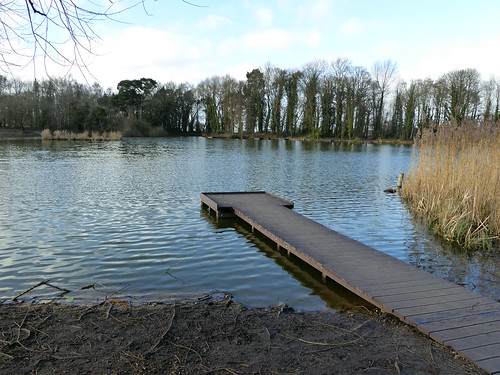
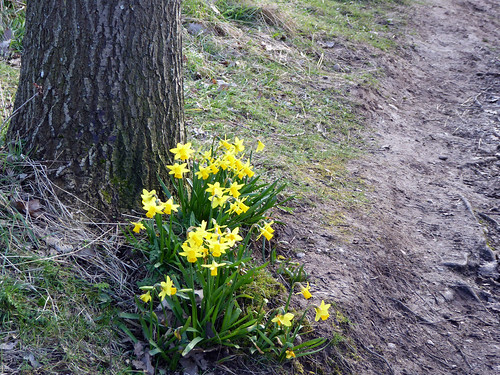
… for a five mile walk in and around Apley Woods.
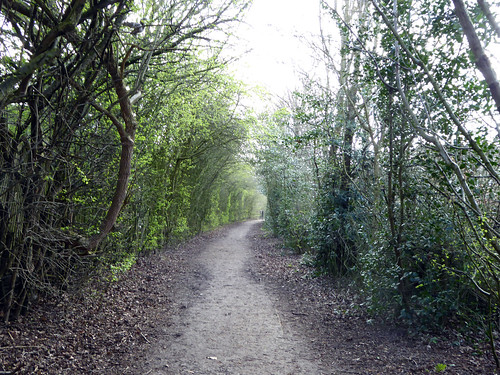
Along the way a a friendly dog greeted me by raising a paw and leaving a paw print on my knee 




8 Comments CherryPie on Mar 17th 2021

2 Comments CherryPie on Mar 15th 2021
Those who contemplate the beauty of the earth find reserves of strength that will endure as long as life lasts.
Rachel Carson

6 Comments CherryPie on Mar 14th 2021

Filed under Faith Foundations, Heritage, Holidays, Sherborne 2019
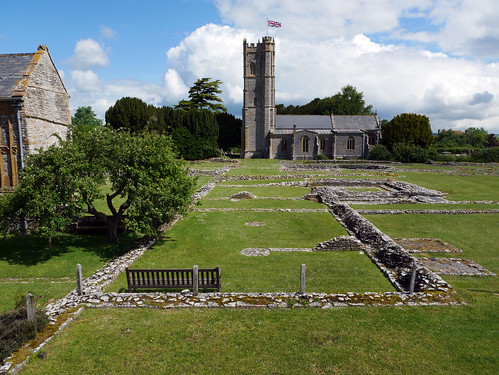
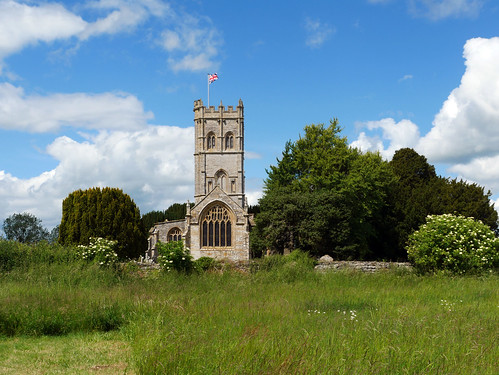
The Parish Church of St Peter and St Paul is situated next to Muchelney Abbey so we took the opportunity to visit after exploring the Abbey. As we entered we were surprised to see a groom with his best man and ushers and noticed that the church was all decked out ready for a wedding. They were just about to leave so were able to spend a few minutes to enjoying the features of the church without disrupting their preparations.
The Church of St Peter and St Paul in Muchelney, Somerset, England has Saxon origins, however the current building largely dates from the 15th century. It has been designated as a Grade I listed building.[1]
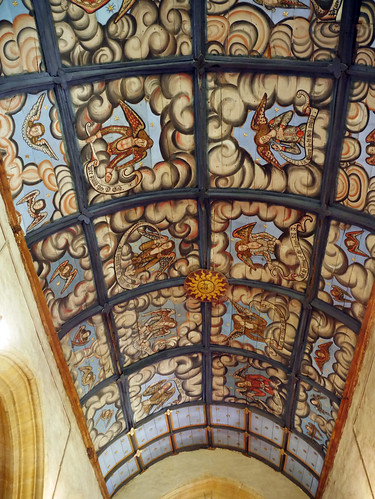
The church, which is adjacent to the site of Muchelney Abbey and close to the River Parrett, has a ceiling enlivened with Jacobean paintings of bare-breasted angels, their nudity thought to symbolize innocent purity.[1] They were painted in the early 17th century.[2]
The church also contains a barrel organ built by Gray and Davison and installed around 1835 to 1840. It is the last one known to be still in the church where it was first installed and still in working order.[3]
There is a three-bay aisled nave and a chancel with a short chapel on either side.[4]
It has a three-stage Somerset tower, dating from around 1468,[5] supported by pairs of full-height corner buttresses. The south-east octagonal stair turret leads to an outer door.[1]


9 Comments CherryPie on Mar 13th 2021

I stepped out of my door into brilliant sunshine for an afternoon walk. As I closed the door a few drops of rain started to fall even though the sky was mostly blue, they soon dried up. I chose a familiar route that I have not walked for a while with the potential to explore other pathways along the way.
By the time I reached Leegomery pools the promising blue sky had turned several shades of grey without a hint of blue to be seen. I lingered a while enjoying the view over the pools and made my decision to take the shortest route back home.
It started to gently rain, a few minutes later the wind blew up and the rain got more intense. A few minutes later, rain was dripping of the peak brim of my weatherproof coat. By the time I got home my trousers were soaked but the rest of me was dry. I fumbled for my house key, water dripping from the brim of my hat into my bag. The key (as always) had mysteriously relocated to the bottom of my bag.
Key retrieved, I opened the door, at which point the rain stopped and the sun came out!
As I stepped inside Mr C poked his head out of the room where he was ‘working from home’ and we both burst out laughing at my watery predicament.
4 Comments CherryPie on Mar 12th 2021

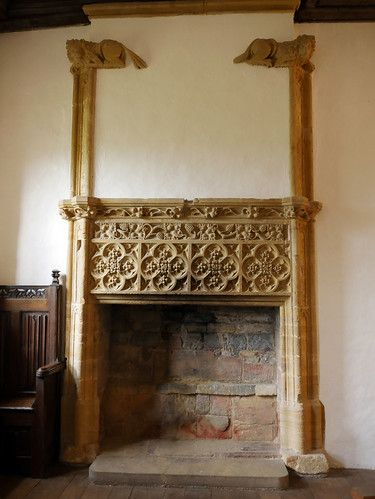
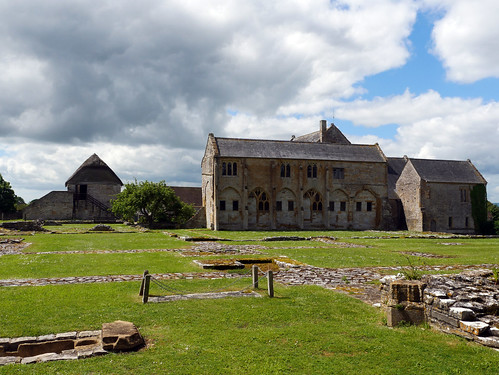
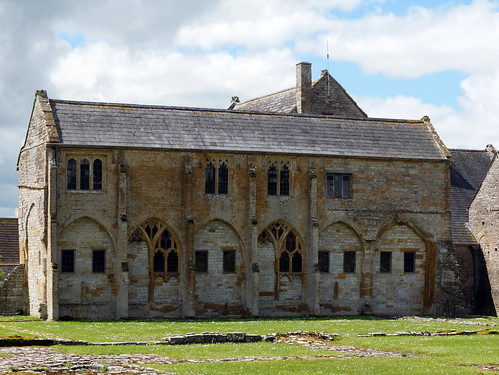
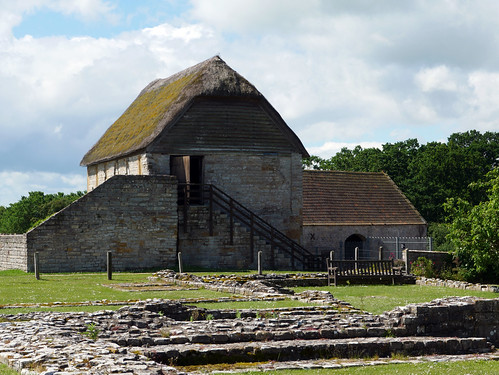
Muchelney Abbey is an English Heritage property in the village of Muchelney in the Somerset Levels, England. The site consists of ruined walls showing the layout of the abbey buildings constructed from the 7th to 16th and the remaining intact Abbott’s House. It is next to the parish church in which some of the fabric of the abbey has been reused.
It comprises the remains and foundations of a medieval Benedictine abbey, the site of an earlier Anglo-Saxon abbey, and an early Tudor house dating from the 16th century, formerly the lodgings of the resident Abbot, which is now a Grade I listed building.[1] The ruins of the abbey have been scheduled as an ancient monument.[2][3]
The abbey was founded in the 7th or 8th century, damaged by Viking raids and rebuilt and refounded in the 10th century. It owned and managed local land. The buildings were expanded from the 12th to 16th centuries until its dissolution in 1538. Most of the buildings were demolished and the stone used in local buildings, although the Abbot’s House and reredorter survive. Some of the tiles and other decorative features from the monastic church were reused in the adjacent parish Church of St Peter and St Paul. Since 1927 the ruins have been in public ownership.





8 Comments CherryPie on Mar 9th 2021