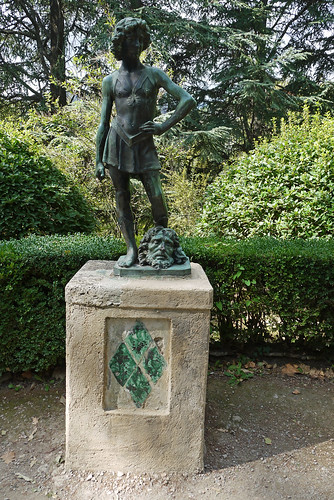
The bronze statue of David was produced by the Neapolitan sculpter Gioachino Varles, in imitation of the one by Verrocchio kept at the national museum in Florence.
Random thoughts and photos of my journey through life…
The bronze statue of David was produced by the Neapolitan sculpter Gioachino Varles, in imitation of the one by Verrocchio kept at the national museum in Florence.
4 Comments CherryPie on Feb 16th 2018
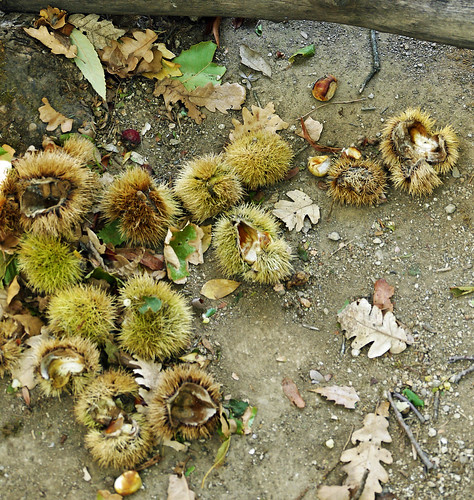
Situated among holm oaks, alder trees and chestnuts lies a natural cave displaying a statue of Eve.
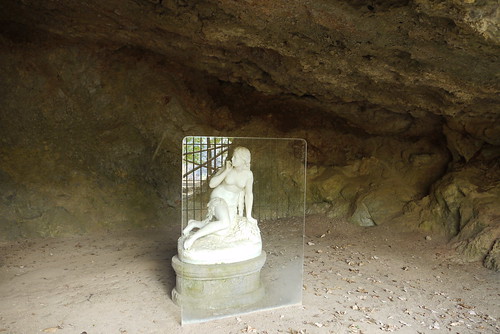
Eve appears to turn, surprised, while her posture and that shy bringing of the hand to the face, communicate feelings of expectation and uneasiness. The technical skill of the sculptor is clear in the softness of the body, in the smooth, almost translucent surface of the white stone and becomes virtuosity in rendering the single locks of hair which, adorned with flowers, flow voluptuously over her naked shoulders. And the magic is renewed at every glance.*
*From the Villa Cimbrone guide leaflet
2 Comments CherryPie on Feb 15th 2018
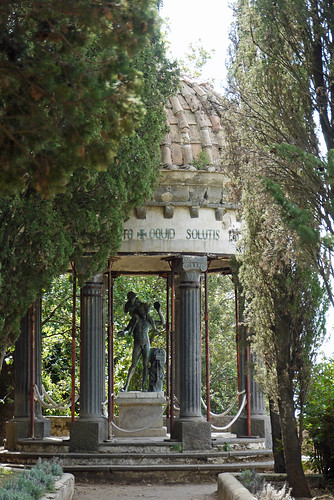
The Temple of Bacchus is supported by eight Doric columns:
On the decorated traveation we can read the following inscription by Catallus: “Oquid solutes est beatius curis mens onus reponit ac peregrine labore fessi venimus larem ad nostrum desiteratosque acquiescimus lecto” (what is finer than, when work is done, with a mind free of every worry and tired from the effort on behalf of others, than when we return to our homes and lie down to rest on the bed we so desired).*
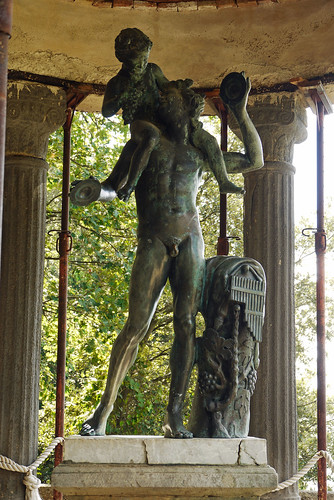
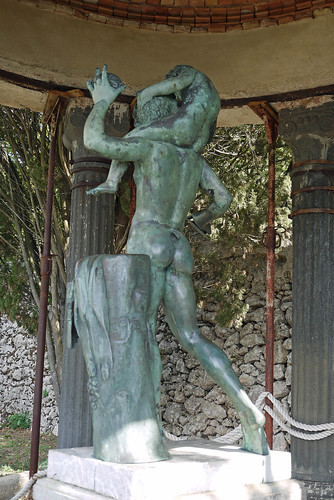
In the centre, on a pedestal, there is a fine bronze statue; liberating and proprietary music and dance, with a Satyr supporting Bacchus with his inevitable bunches of grapes. Highly figurative the temple was probably conceived by Lord Grimthorpe as the place where his memory could be preserved. His ashes, upon his express wishes, were buried at the foot of the pedestal.*
*From the Villa Cimbrone guide leaflet
6 Comments CherryPie on Feb 13th 2018
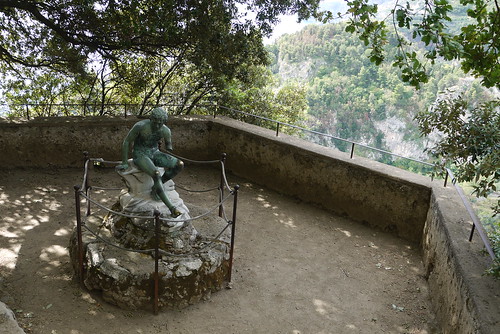
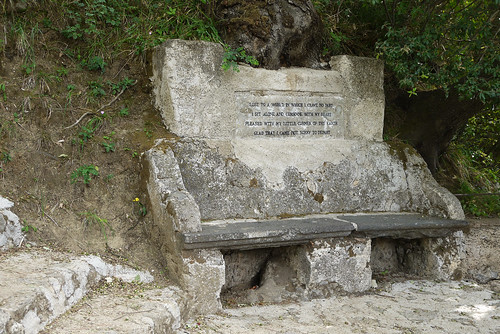
We proceed on our visit with our hearts full of joy and our spirits refreshed, down a steep lane which leads us to the Seat of Mercury, winged messenger to the gods, where we find a XVIIIth century bronze copy of “Hermes at rest”, a statue from the old school of Lisippo on display at the national museum in Naples.”*
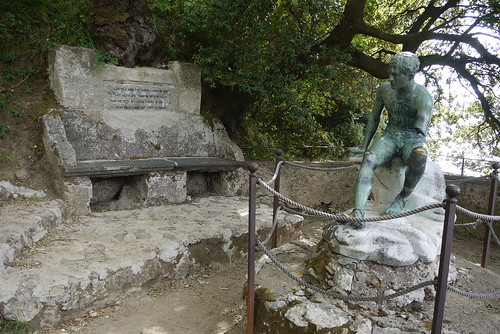
To one side, as an invitation to pause, in the shade of an oak tree, Mercury’s Seat, with an inscription in English on the parapet erroneously attributed to the writer and poet D. H. Lawrence who found such inspiration here for his works, while we know today that the quotation is from Catullus: “Lost to the world of which I desire no part, I sit alone and speak to my heart, satisfied with my little corner of the world, content to feel no more sadness for death.*
*From the Villa Cimbrone guide leaflet
12 Comments CherryPie on Feb 12th 2018
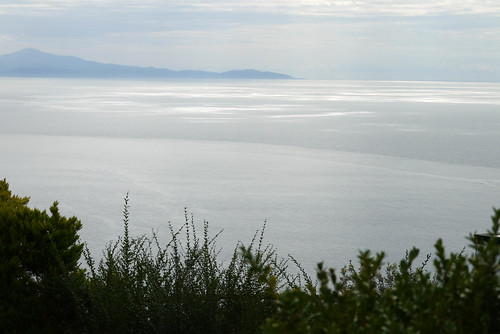
There is a silence into which the world cannot intrude. There is an ancient peace you carry in your heart and have not lost.
From “a Course of Miracles”
6 Comments CherryPie on Feb 11th 2018
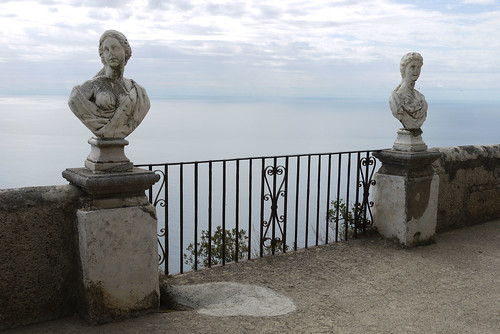
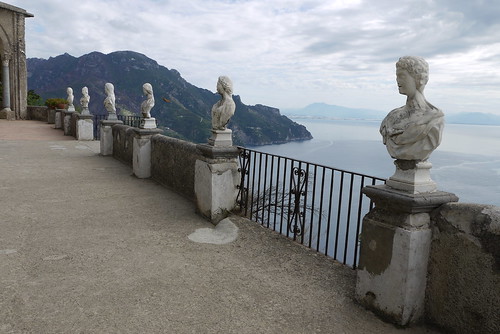
The spectacle which thus splendid, incomparable natural balcony, adorned with eighteenth century marble busts opens before the incredulous eyes of visitors truly comprehends something infinite but, any adjective to try and somehow describe this miracle of nature is ineffective. Casting your eyes down as far as the mountains of Cilento and the tip of Licosa, over this sparkling sea, over the varied and multi-coloured Coast of Amalfi with its lemon groves, the little houses clinging to the hills, dazed by the scent of fruit and furze, the passing of time does not matter to us, bewitched by such beauty, such Divine generosity.*
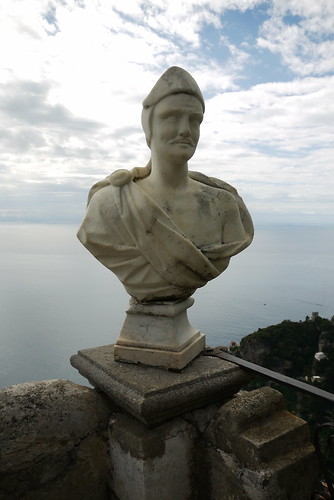
*From the Villa Cimbrone guide leaflet
6 Comments CherryPie on Feb 10th 2018