Happiness depends upon ourselves.
Aristotle
Random thoughts and photos of my journey through life…
Happiness depends upon ourselves.
Aristotle
8 Comments CherryPie on Oct 9th 2016
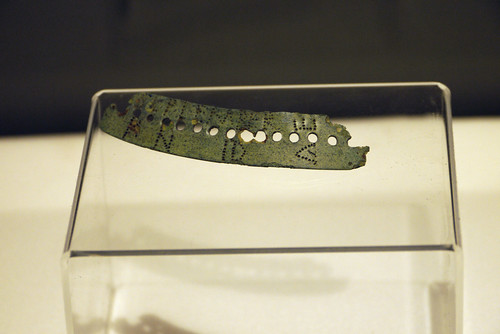
One of the Vindolanda museum articles was a small fragment of a clock/calendar device. I found it fascinating.
This bronze fragment was found during excavations between the east granary and the principia (headquarters building) in 2008.
On it can see written SEPTEMBER, K(alendae), N(onae), ID(us), and AE (quinoctium). These letters clearly indicate that it was part of a timekeeping device or calendar. The ides were the first day of the month, the nones of September fell on the fifth, and the ides of September occurred on the thirteenth and the autumn equinox was on or near the twenty-third.
When complete the calendar would have been a circular disc about 30cms in diameter. Every two days a peg (not found) would have been moved into the next hole, indicating the correct date.
The exact nature of the particular device, of which this fragment was a part, is unclear. Cicero wrote a personal calendar into which a peg was inserted to mark the date (Att. 5.14.1,, 15.1). This fragment may have been part of a similar calendar, however the Roman architect and engineer Vitruvius (De arch. X8.8-15) wrote about a much more complicated device which was meant to measure varying of day and night-time hours throughout the year, the so-called anaphoric water clock (Latin: horologium hibernum) and an alternative theory is that this fragment could have been part of a similar mechanism. This is one of only three ancient portable calendars ever found, joining a Celtic one engraved on a bronze tablet unearthing in Coligny, France in 1897, and a Roman bronze menologium (register of months) from a well at the site of le Cagnot at Grand, France, in 1886.
The Vindolanda calendar is however unique and the first object of its type to come from Roman Britain. Whatever the original instrument looked like, this small piece give us an insight into the means by which life on the frontier was structured and the importance of remaining synchronised with the outside world.*
*From a signboard next to the clock fragment
8 Comments CherryPie on Oct 7th 2016
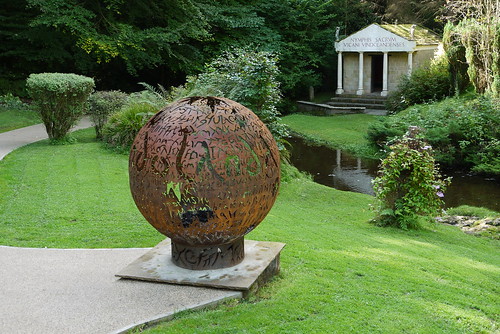
This art sculpture in the form of a ‘fire ball’ pays tribute to the work of archaeologist Robin Birley, who directed the Vindolanda Trust and excavations from 1970-2001, and to celebrate his incredible find, in 1992, of over 350 Roman ink on wood writing tablets (letters) on a Roman bonfire site here at Vindolanda
The Roman cohort of the 9th Batavians had been burning their commanding officer’s correspondence before they left Vindolanda in AD 105. The bonfire had been lit but abandoned after a rain shower meaning that most of the tablets were singed but otherwise survived to illuminate our understanding of life on the Roman frontier.
The fire ball was designed and created for the Vindolanda Trust by Andy Gage and depicts cursive Roman writing from the tablets. The fire ball will be ceremoniously lit every year to commemorate the discovery of what is considered ‘Britain’s Top Treasure’.*
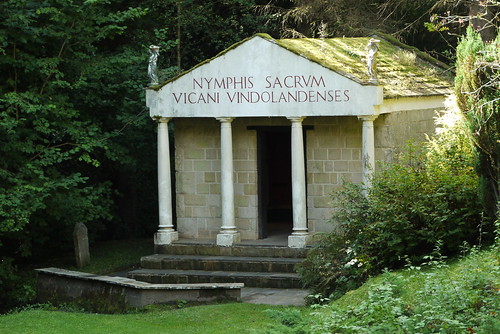
In the background is a replica of a Roman temple.
*From a signboard next to the sculpture
10 Comments CherryPie on Oct 6th 2016
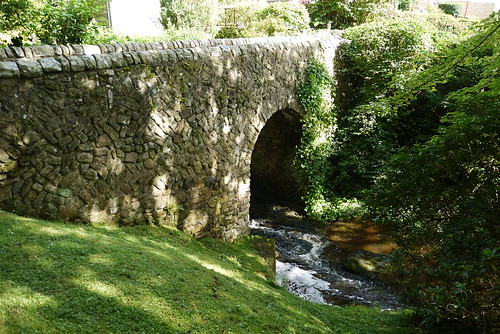
This delightful bridge crosses a stream which runs through the gardens that are situated next to the museum at Vindolanda.
10 Comments CherryPie on Oct 5th 2016
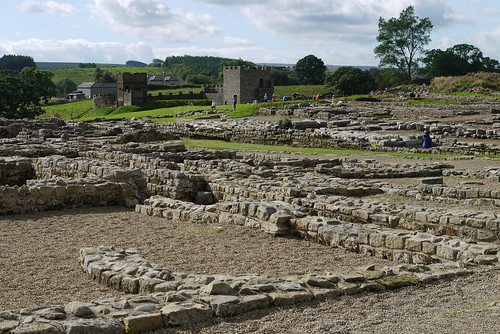
Vindolanda lies just to the south of the curtain wall of Hadrian’s Wall and has a very different ‘feel’ to other sites along the Wall. It lies upon the first Roman frontier in the north – The Stanegate Road and in a stunning landscape which lets your imagination really connect with its past. You will probably visit Vindolanda by driving or walking along this road to reach the fort and museum. Although first built by the Roman army before Hadrian’s Wall Vindolanda became an important construction and garrison base for the Wall, a Hadrian’s Wall fort in its own right. During this time Vindolanda was demolished and completely re-built no fewer than nine times. Each re-build, each community, leaving their own distinctive mark on the landscape and archaeology of the site.
After Hadrian’s Wall and the Roman occupation was abandoned by its imperial armies Vindolanda remained in use for over 400 years before finally becoming abandoned in the 9th century.
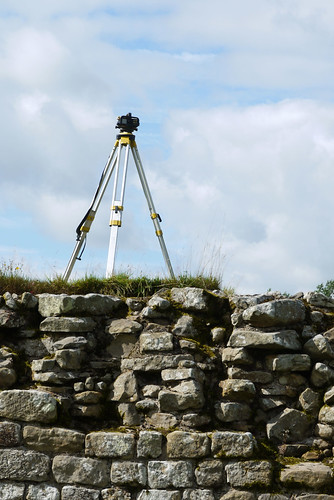
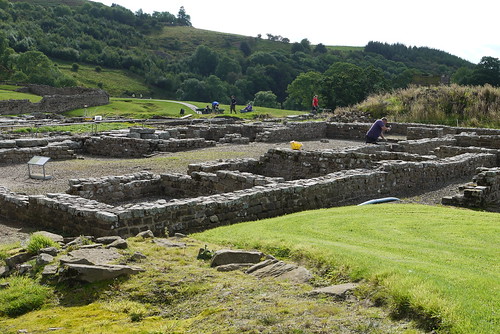
The excavations at Vindolanda, set in its stunning landscape, aim to unravel the mysteries of its nine Roman forts/towns and countless communities. It is a huge and complicated task which is undertaken by a dedicated team of professionals leading a veritable army of volunteers. Come and see what the archaeologists discover, the excavations rarely disappoint, and continue to provide some of the most stunning examples of Roman and early British material culture to come from nine forts and nine centuries.
The physical remains include some of the following:
- A large Pre-Hadrianic bath house and a beautifully preserved 3rd century bath house.
- Several commanding officer’s residences and barrack buildings
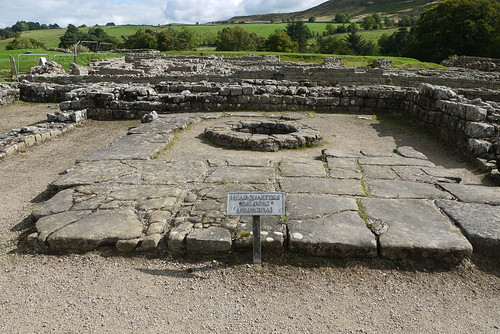
- A headquarters building
- 3rd and 4th century evidence of village houses and workshops, latrines, and a Roman Celtic temple to an unknown Romano Celtic God.
- The only temple to be found on display to a Roman god inside an auxiliary fort anywhere in the Roman Empire (Jupiter Dolichenus).
- A Post-Roman mausoleum and late Roman Christian church Replicas of a Roman temple and shop, a Romano-British house and replica sections of Hadrian’s Wall in turf timber and stone
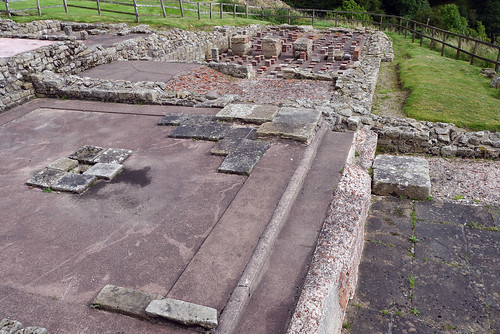
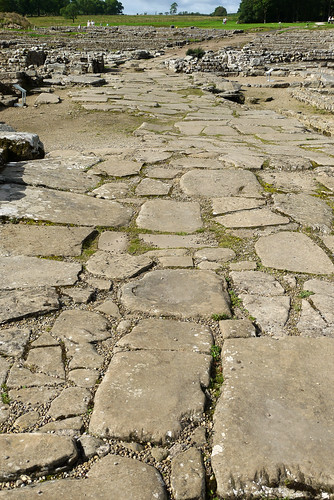
Added to all of this is the stunning Museum on the site, housing the cream of the Vindolanda Trusts collection from its on-going excavations. The collection includes the famous writing tablets (Roman post cards covered in ink handwriting), the finest collection of Roman footwear from the Roman Empire, textiles, pottery, militaria and personal items from the communities that lived there.
16 Comments CherryPie on Oct 4th 2016
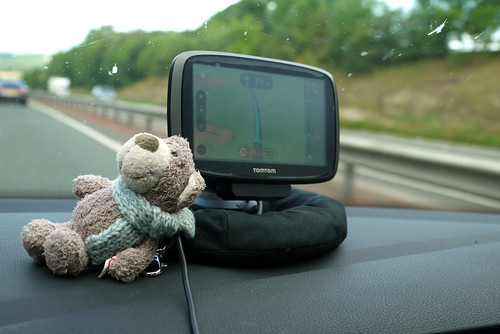
Before we set off on our travels to Northumberland I decided to update the SatNav to the latest map version. I was soon reminded why I gave up trying to upgrade the map on my previous attempt.
I logged on and was informed by the website that the device was full so I removed the old map and tried to install the new map. I was then informed that there was still not enough room on the device for the new map. Unfortunately I did not have a suitable memory card to allow me to expand the data. I elected to install only the GB part of the map and sort out the rest of the map in slow time when I had acquired a memory card. Recently Mr C had made some tweaks to our internet settings to fix a problem which meant that unfortunately the file took hours to download and then stalled part way through.
I stopped the download and checked the device; it looked like the old map was still there but the voice instructions seemed not to be working. I gave up, logged out of the update programme and plugged the SatNav into a USB port so that it would be fully charged for the coming holiday; even though I wasn’t sure that the map was working properly anymore. A little while later I checked the progress and found that the charge was almost complete. The SatNav was also displaying a message that stated that there were no maps available and that it was updating. A short while later the update was complete and a new complete European map was installed!! I know it is a new update because the SatNav gives an announcement of the destination and journey arrival time after it is programmed which it had not done before…
14 Comments CherryPie on Oct 3rd 2016
To a mind that is still the whole universe surrenders.
Chuang Tzu
8 Comments CherryPie on Oct 2nd 2016