On our visit to the Bishop’s Palace I particularly enjoyed the temporary exhibition entitled ‘The Ornate & The Beautiful‘. The exhibition displays the extraordinary craftsmanship of the textile industry from the 14th century to the present day and includes some of the most beautiful and rare vestments and ecclesiastical textiles from around the country. The exhibition includes items that have not been on public display since 1930.
Over the next few days I will share some of the items displayed in the exhibition.
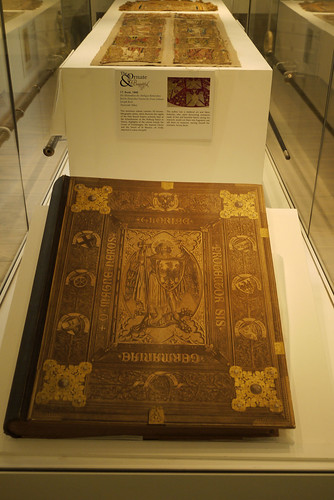
The photo in today’s post shows a book dated 1860; Die Kleinodien des Heiligen Romischen Reichs Deutscher Nation by Franz Johann Joseph Bock:
This enormous volume contains 58 chromolithographic plates, which illustrate regalia of the Holy Roman Empire; primarily kept at the Schatzkammer at the Hofburg Palace in Vienna. Highlights of the volume include the Crown of Charlemagne, the Imperial Gloves and the Sword of St Maurice, all vividly depicted in colour and gold.
The author was a medieval art and fabric historian, who, upon discovering vestments made of fine and beautiful fabrics during his research, would cut them into fragments and sell them to museums, earning himself the nickname ‘Scissor Bock’. *
*From an information board next to the book
Tags: Exhibition, The Bishop's Palace, The Ornate & The Beautiful, Vacation, Wells

The Bishop’s Palace and accompanying Bishops House at Wells in the English county of Somerset, is adjacent to Wells Cathedral and has been the home of the Bishops of the Diocese of Bath and Wells for 800 years. It has been designated by English Heritage as a Grade I listed building.
Building of the palace started around 1210 by Bishops Jocelin of Wells and Reginald Fitz Jocelin. The chapel and great hall were added by Bishop Robert Burnell between 1275 and 1292. The walls, gatehouse and moatwere added in the 14th century by Bishop Ralph of Shrewsbury. The Bishops House was added in the 15th century by Bishop Thomas Beckington. The great hall later fell into disrepair and was partially demolished around 1830.
The palace was originally surrounded by a medieval deer park. When the walls were built, streams were diverted to form the moat as a reservoir. In the 1820s, the grounds within the walls were planted and laid out as pleasure grounds by Bishop George Law, who created a reflecting pond near the springs. Parts of the buildings are still used as a residence by the current bishop, however much of the palace is now used for public functions and as a tourist attraction.


Tags: The Bishop's Palace, Vacation, Wells
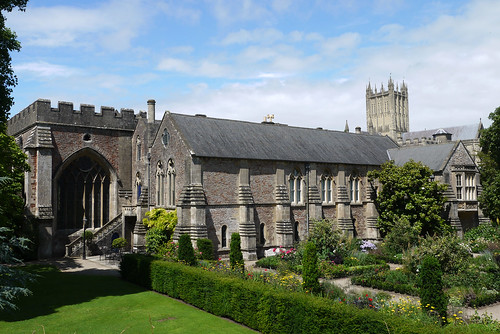
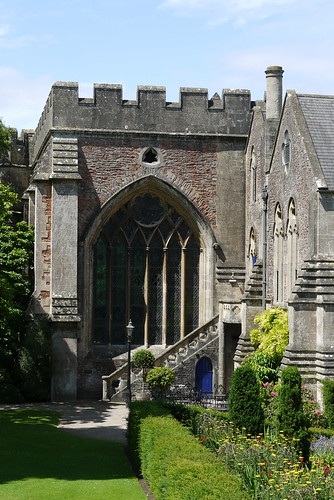
The Bishop’s Chapel adjoins the Bishop’s Palace:
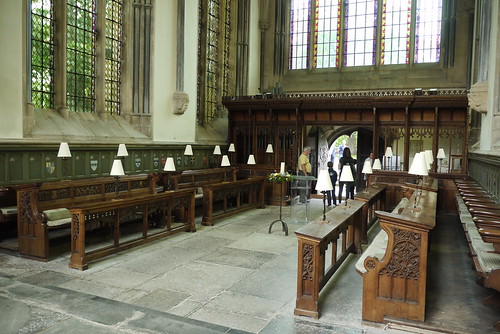
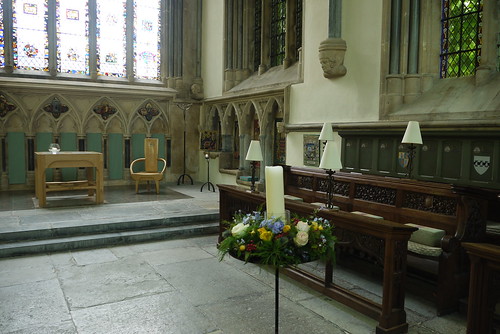
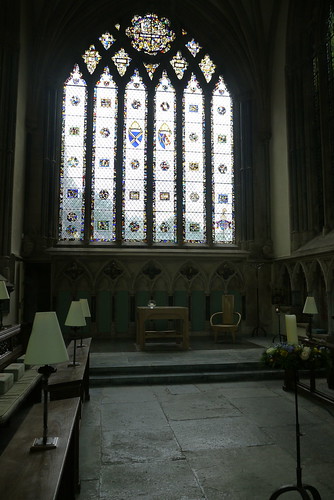
Bishop Burnell’s chapel, built between 1275 and 1292, is filled with light by tall windows in all four walls. Here the medieval bishops’ households met for formal prayer, led by their own chaplains and priests.
Tags: The Bishop's Chapel, The Bishop's Palace, Vacation, Wells
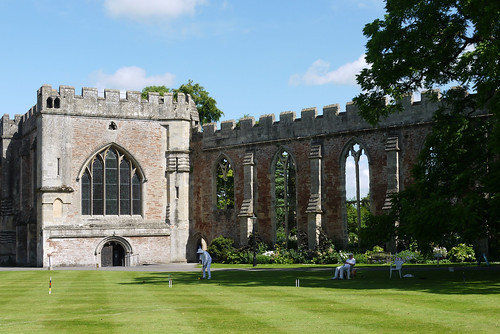
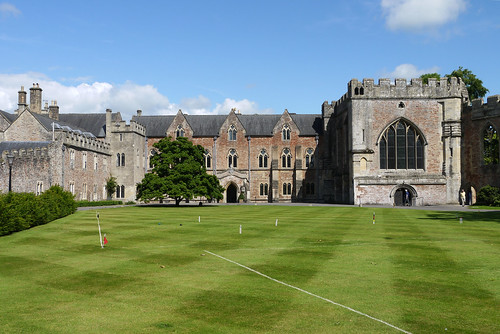
On our first day in Wells we came across the quintessentially English scene on the lawn in front of the Bishop’s Palace.
Tags: Croquet, Croquet Lawn, The Bishop's Palace, Vacation, Wells
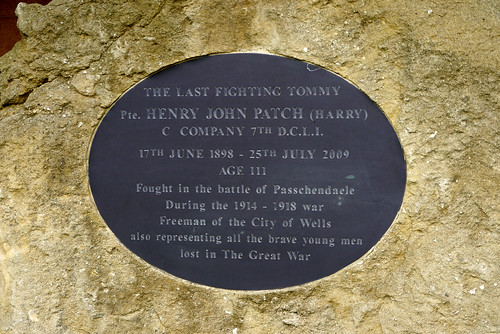
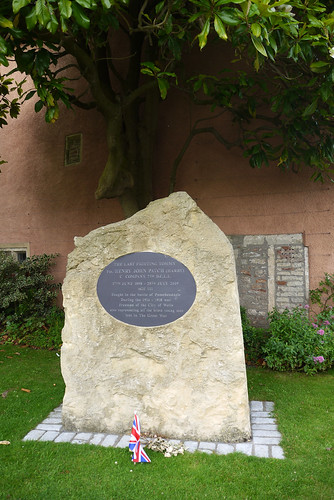
Henry John “Harry” Patch (17 June 1898 – 25 July 2009), dubbed in his later years “the Last Fighting Tommy“, was a British supercentenarian, briefly the oldest man in Europe and the last surviving combat soldier of the First World War from any country. He is known to have fought in the trenches of the Western Front.[1] Patch was the longest surviving combat soldier of World War I, but he was the fifth longest surviving veteran of any sort from World War I,
Patch died at 9 a.m. on 25 July 2009, aged 111 years, one month, one week and one day.
Patch’s funeral was held in Wells Cathedral on Thursday 6 August 2009.[42][43] At 11.00 a.m., the bells of Wells Cathedral were rung 111 times to mark each year of his life. A quarter peal of Grandsire Caters was also rung, half muffled, while quarter-peals were also rung in Bristol and at several churches around the country.[44][45] His coffin travelled from his home, Fletcher House, to the cathedral where the service commenced at noon.[46] The theme of the service was “Peace and Reconciliation” and in addition to pallbearers from The Rifles (the successor regiment to the Duke of Cornwall’s Light Infantry), Patch’s coffin was accompanied by two private soldiers from each of the armies of Belgium, France and Germany.[43]
Tags: Defence Matters, Harry Patch, Memorial, Vacation, Wells
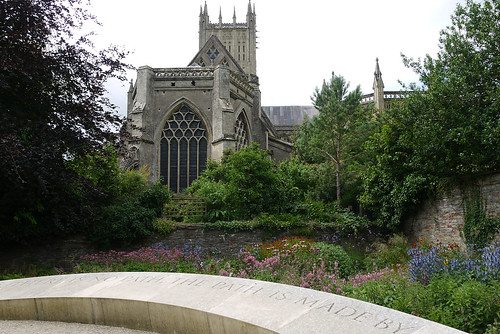
Wanderer, your footsteps are the path, and nothing more; Wanderer, there is no path, the path is made by walking, by walking one makes the path and upon glancing back one sees the path that will never be trod again. Wanderer there is no path – only waves upon the sea.
Antonio Machado, Campos de Castilla, 1912
Tags: Cherie's Place Thought, The Bishop's Palace, Vacation, Wells, Wells Cathedral