 …DNA and the Origins of Knowledge
Synopsis from the book cover:
While living among Peruvian Indians, anthropologist Jeremy Narby became intrigued by their claim that their phenomenal knowledge of plants and biochemistry was communicated to them directly while under the influence of hallucinogens.
Despite his initial scepticism, Narby found himself engaged in an increasingly obsessive personal quest. The evidence he collected – on subjects as diverse as molecular biology, shamanism, neurology and ancient mythology – Led inexorably to the conclusion that the Indians’ claims were literally true: to a consciousness prepared with drugs, specific biochemical knowledge could indeed be directly transmitted through DNA itself Narby demonstrates that indigenous and ancient peoples, from the Aborigines to the Egyptians, have known for millennia about the double helix structure – something conventional science only discovered in 1953.
Review:
The book starts off with Jeremy describing his placement in the Peruvian Amazon’s Pichis Valley. He was there for a two-year period of fieldwork to enable him to get a doctorate in anthropology. Whilst there he was persuaded to take the hallucinogenic brew, the main ingredient of which, is tobacco. He describes the experience he had whilst under the influence of the brew and also his discussions with the indigenous people.
A few years later his work which involved promoting community development in Third World countries led him to attend the ‘Earth Summit’ in Rio. It was this event that caused him to notice a dilemma; the hallucinatory knowledge is confirmed and used by the pharmaceutical industry but it cannot be discussed because it contradicts the logic of Western knowledge. He saw this as an enigma and a blind spot for science and decided to make a detailed investigation of the subject.
His investigations covered the science of DNA. He explains how he thought that the ‘Double Helix’ (DNA) correlated with the snake imagery that he saw in his hallucinatory state and also with the many historical mentions of snakes in other cultures. His investigations led him to believe that people who drank the hallucinogenic concoction could defocolize their consciousness and connect with the network of DNA based life. He leaves it with the reader to decide whether or not his theory is correct.
I found the book very interesting. The book provides lots of references and notes and gives a comprehensive bibliography which allows for further exploration of the different subjects within the book.
Tags: Book Review, Books, DNA, Jeremy Narby
If you are distressed by anything external, the pain is not due to the thing itself, but to your estimate of it; and this you have the power to revoke at any moment.
Marcus Aurelius (121-180)
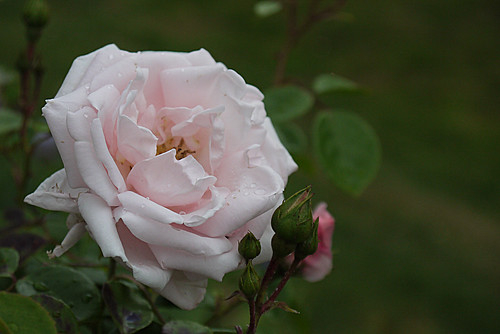
Tags: Cherie's Place Thought, Flower, National Trust, Rose, Wightwick Manor

I invite you to join me at Vision & Verb where I have written about waiting for spring to arrive.
Tags: Hope, Inspiration, Life, Rebirth, Spring, Vision & Verb
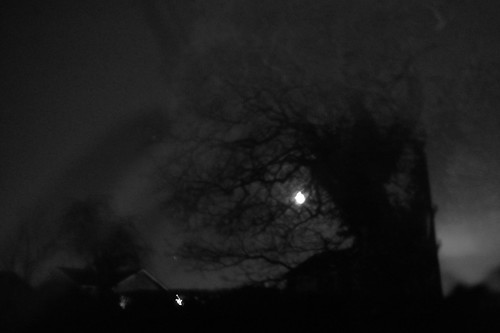
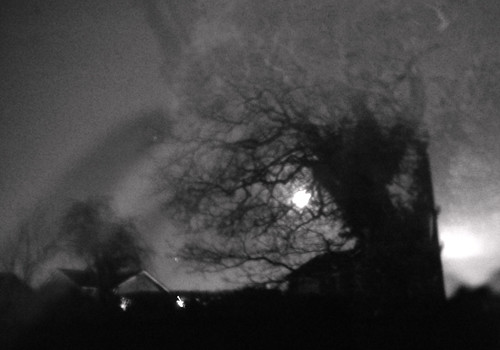
This hand held shot (it was a bit late at night to be messing with a tripod) was taken on my camera’s Black and White setting. Apart from a little cropping to remove a reflection of the kitchen lights, the first photo has no other editing done to it. The second one I cropped and lightened up a bit.
Tags: Cherie's Place, Moon, My Oak Tree

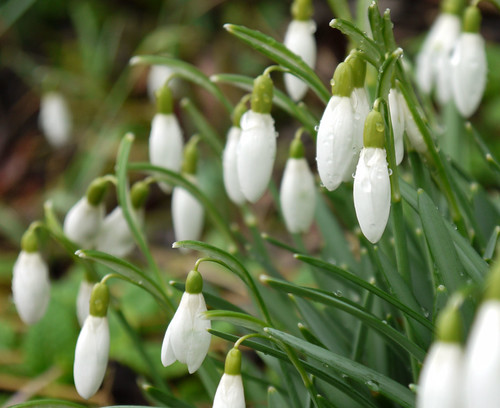
noun, verb, dropped or dropt, drop·ping.
1. a small quantity of liquid that falls or is produced in a more or less spherical mass; a liquid globule.
2. the quantity of liquid contained in such a globule.
3. a very small quantity of liquid: I’ll have a little more tea, just a drop.
4. a minute quantity of anything: not even a drop of mercy.
For more of this weeks PhotoHunt pictures check out Whistlestop PhotoHunt.
Tags: English Heritage, PhotoHunt, Snowdrops, Wenlock Priory

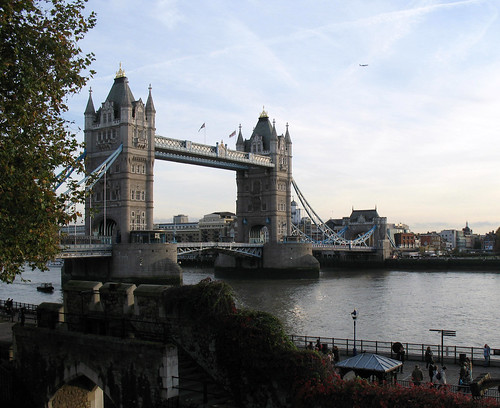
A brief history from Wiki:
Background
In the second half of the 19th century, increased commercial development in the East End of London led to a requirement for a new river crossing downstream of London Bridge. A traditional fixed bridge could not be built because it would cut off access by tall-masted ships to the port facilities in the Pool of London, between London Bridge and the Tower of London.
A Special Bridge or Subway Committee was formed in 1876, chaired by Sir Albert Joseph Altman, to find a solution to the river crossing problem. It opened the design of the crossing to public competition. Over 50 designs were submitted, including one from civil engineer Sir Joseph Bazalgette. The evaluation of the designs was surrounded by controversy, and it was not until 1884 that a design submitted by Sir Horace Jones, the City Architect (who was also one of the judges),[5] was approved.
Jones’ engineer, Sir John Wolfe Barry, devised the idea of a bascule bridge with two towers built on piers. The central span was split into two equal bascules or leaves, which could be raised to allow river traffic to pass. The two side-spans were suspension bridges, with the suspension rods anchored both at the abutments and through rods contained within the bridge’s upper walkways.
Construction
Construction started in 1886 and took eight years with five major contractors – Sir John Jackson (foundations), Baron Armstrong (hydraulics), William Webster, Sir H.H. Bartlett, and Sir William Arrol & Co.[6] – and employed 432 construction workers. E W Crutwell was the resident engineer for the construction.[7]
Two massive piers, containing over 70,000 tons of concrete,[5] were sunk into the riverbed to support the construction. Over 11,000 tons of steel provided the framework for the towers and walkways.[5] This was then clad in Cornish granite and Portland stone, both to protect the underlying steelwork and to give the bridge a pleasing appearance.
Jones died in 1887 and George D. Stevenson took over the project.[5] Stevenson replaced Jones’s original brick façade with the more ornate Victorian Gothic style, which makes the bridge a distinctive landmark, and was intended to harmonise the bridge with the nearby Tower of London.[7] The total cost of construction was £1,184,000[7] (£100 million as of 2012).[8]
Tags: Architecture, Architecture 100, Bridge, London, Tower Bridge