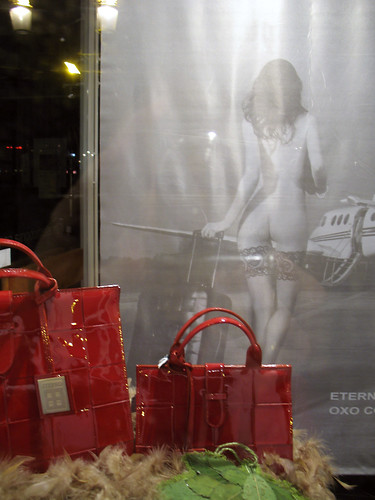
There seem to be a few items of clothing missing for a plane journey and I am wondering what is inside the case… Well at least it looks like she hasn’t missed her flight 
For more of this weeks PhotoHunt pictures check out tnchick.
PS: Note the change of url to tnchick’s blog, it is now http://tnchicks.wordpress.com/
Tags: Bruges, Brugge, Luggage, PhotoHunt, Poster, Weekend away
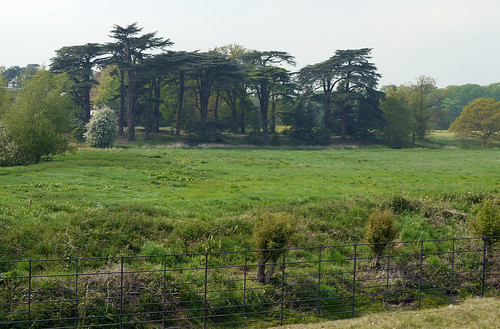
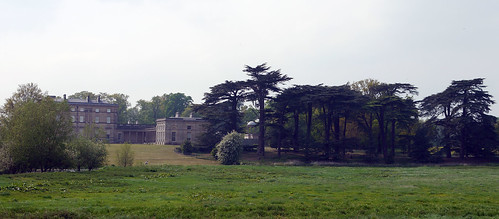
The Lebanese Cedars are magnificent, I can remember the days when I could walk beneath their boughs and enjoy them in there glory. Now they are fragile and can only be viewed and enjoyed from a distance…
It reminds me very much of my first visit to Stonehenge where I was able to look up and touch the stones. I was in awe, just being in the vicinity of such immense stones…
Tags: Attingham Park, Cedars of Lebanon, National Trust
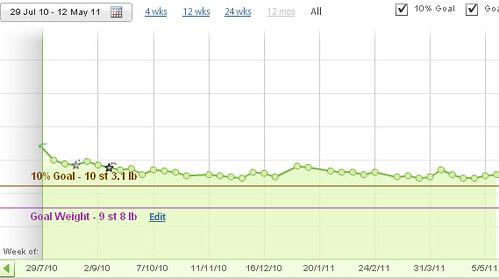
A gain of 0.5lb this week.
Tags: ProPoints, Weight Loss, Weight Watchers
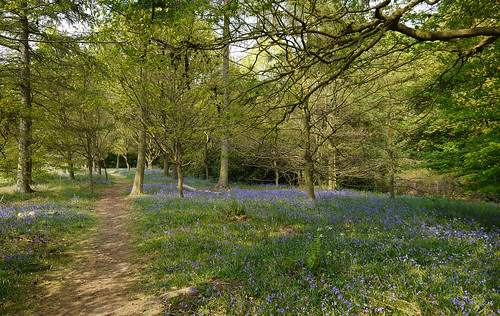
My hundred thousand bells of blue,
The splendour of the spring,
They carpet all the woods anew
With royalty of sapphire hue;
The Primrose is the Queen ’tis true
But surely I am King.
Ah yes,
The peerless woodland King.
Cicely Mary Parker
Tags: Attingham Park, Bluebells, National Trust, Poetry, Quotation, Trees
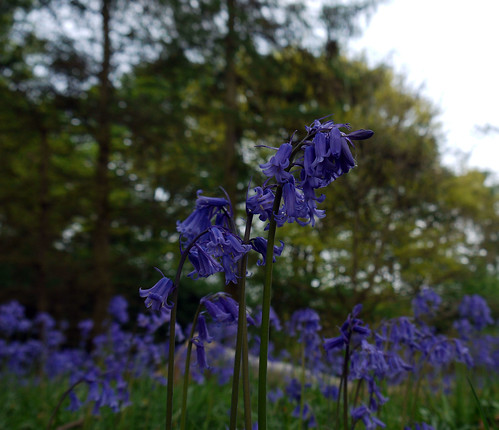
The bluebell is the sweetest of flowers,
That waves in summer air;
Its blossoms have the mightiest power,
To sooth my spirit’s care.
Emily Bronte
Tags: Attingham Park, Bluebells, National Trust, Quotation
On my recent visit to Attingham Park I enjoyed the walk along the Bluebell Trail. This took in both the native bluebell and the Spanish invader, a signboard along the trail explained in detail:
Our native bluebell is a typical ‘Atlantic’ species growing only in the moist conditions of Western Europe and reaching its peak of abundance in the British Isles. The British Isles is home to about 70% of all bluebells and the plant is justly the symbol of The Botanical Society of the British Isles.
Although thought of as a woodland plant, the bluebell responds well to less shady positions; thinning or coppicing woodland allows herbs such as bluebell, wood anemone and primrose to increase dramatically.
The leaves of bluebell contain toxic glycosides called ’scillarens’ that discourage herbivores, the toxins cause the heart rate to slow down, an effect similar to digitalis in foxgloves. In winter the bulbs of bluebells contain high levels of the storage sugars, fructan and fructose, Gerards Herbal, 1957, informs us that these sugars were extracted and used to stiffen Elizabethan ruffs.
What King Philip of Spain’s Armada failed to achieve in 1588 the Spanish bluebell has achieved by stealth and guile, the invasion of Britain. This foreign species is stouter and less nodding than our native bluebell, its flowers can be pink, purple, white or blue; you may notice some Spanish bluebells, there are some growing close to the Bee Lawn and on the riverbank by the cedars, this is unfortunate as the Spanish bluebell hybridises with our native species.
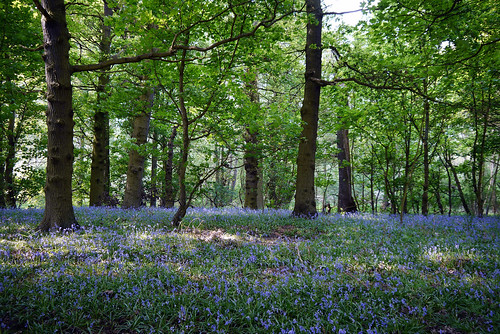
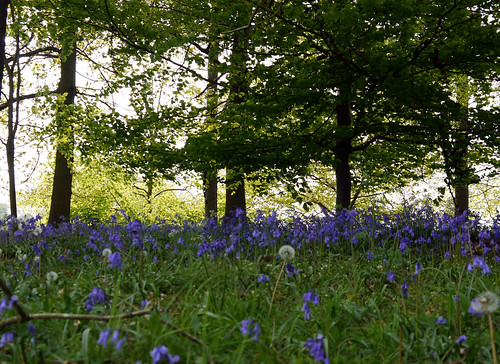
Tags: Attingham Park, Bluebell Wood, Bluebells, National Trust
The glasshouses are Victorian, one contains two surviving Black Hamburg vines and the others are used to store house-plants and more tender bedding plants.
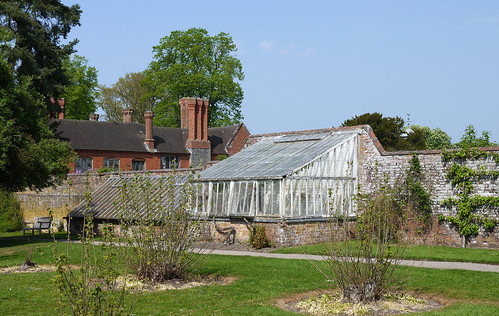
Tags: Baddesley Clinton, Glasshouse, National Trust