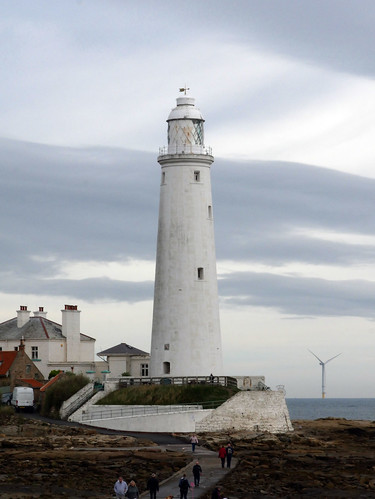
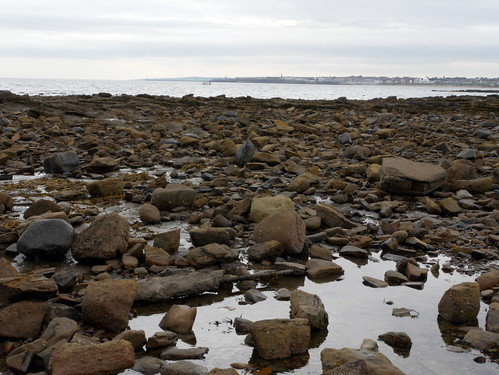
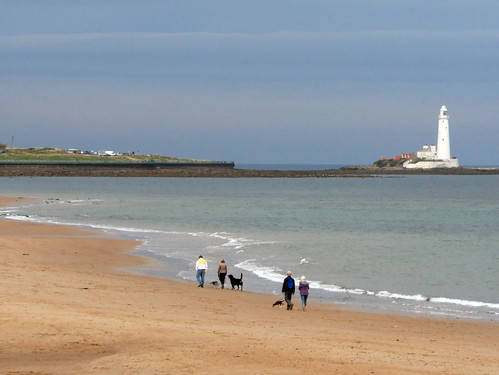
Reached between the tides via a short causeway, St. Mary’s has all the fascination of a miniature, part-time island. The Lighthouse, completed in 1898 on a hazardous coast for shipping, remained operational until 1984 when it was superseded by modern navigational techniques. Since then the Lighthouse and former keepers’ cottages have been operated as a visitor centre by North Tyneside Council. The surrounding Nature Reserve contains an area of rockpools, clifftop grassland, a beach and newly created wetland habitats.
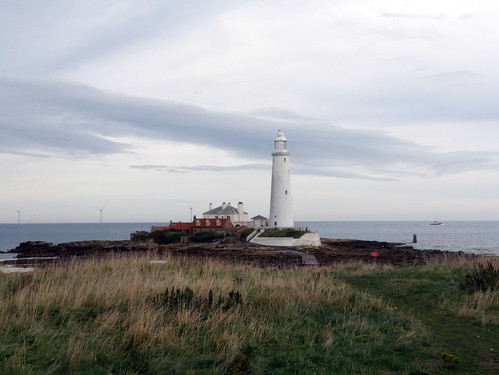
Tags: Lighthouse, St Mary's Lighthouse, Vacation, Whitley Bay
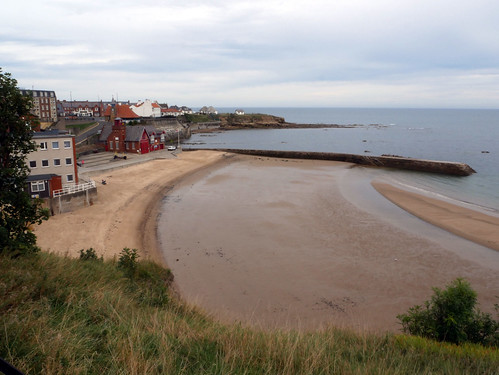
Cullercoats is a sandy bay enclosed by small piers:
The village has been popular with generations of visitors with its secluded bay the highlight. The beach has a Seaside Award and is ideal for bathing. The south of the bay is used as a launch site for recreational crafts. Cullercoats had a thriving fishing industry in the 1800s and small fishing boats – cobles – can still be seen in and around the bay today. Dove Marine Laboratory, on the bay itself, is an important research centre for Newcastle University’s School of Marine Science.
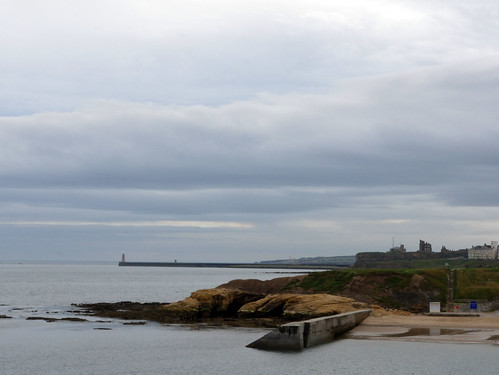
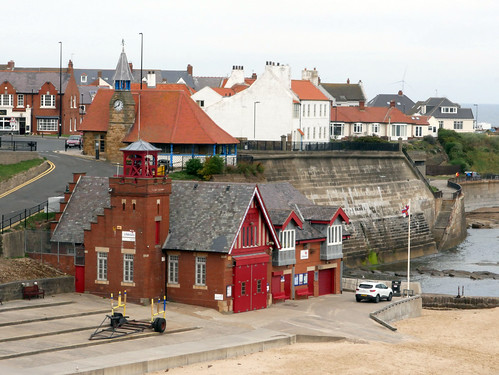
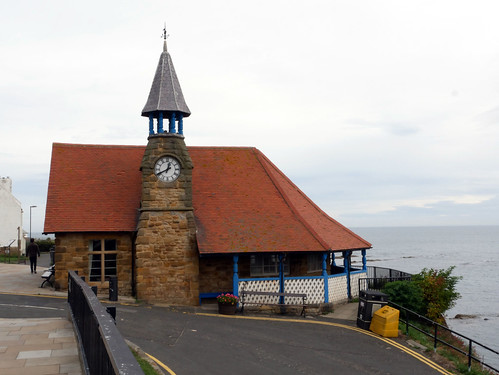
The Victorian RNLI Lifeboat Station is still active today. At the top of the north bank is Cullercoats Watch House. In the 19th Century Cullercoats developed a reputation as a popular artists’ colony with the everyday lives of the fishing folk often used as subjects.
Tags: Cullercoats, Lifeboat Station, Newcastle, Northumber- land, RNLI, Vacation, Watch House
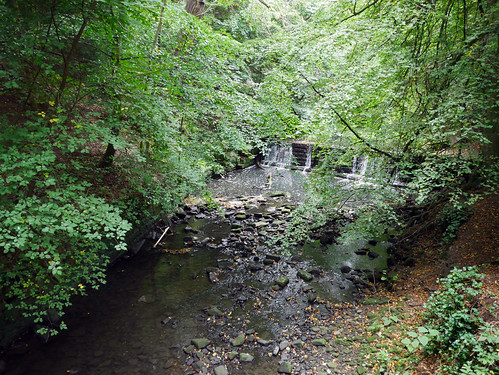
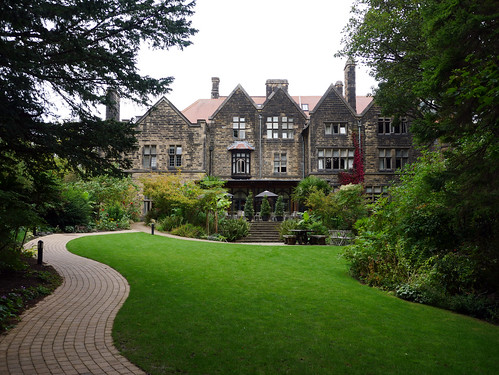
We enjoyed our brief visit to Jesmond Dene and hope to return soon to further explore the tranquil delight.
In the 1850s, William Armstrong acquired the land which is now known as Jesmond Dene:
It is probable that the area we know as Jesmond Dene has always been wooded but, prior to the mid 1800s the wood was probably straggly and interspersed with a heavy undergrowth of gorse, brambles and the like. The trees present were mostly oak, ash, holly and hazel, all indigenous to this country, and this tree selection can still be seen near Castles Farm Bridge at the North end of the Dene.
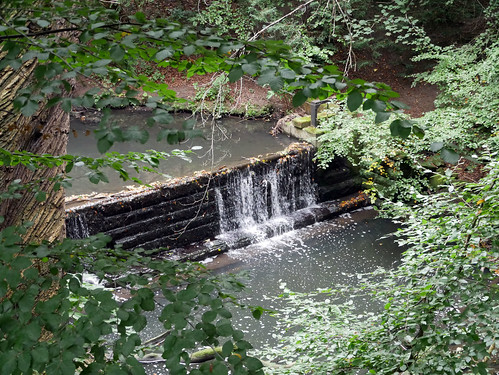
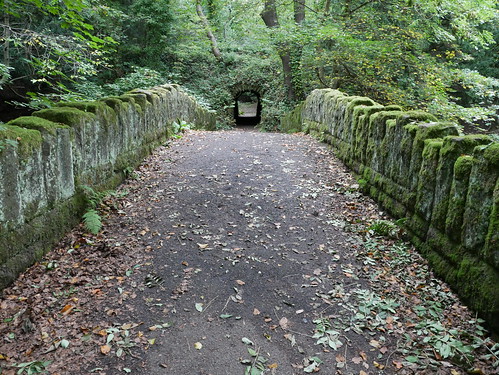
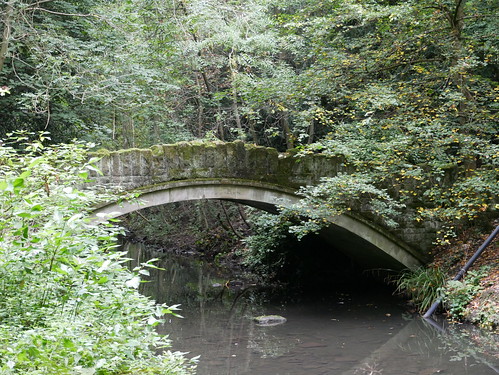
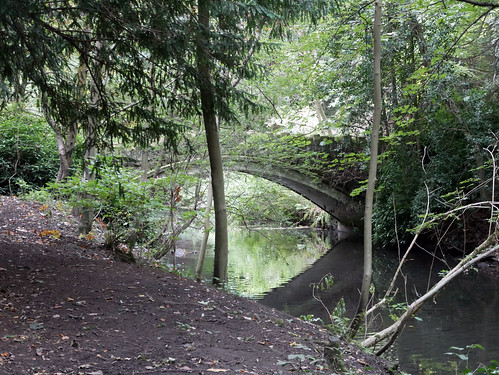
In the 1850s, William George Armstrong (later Lord Armstrong) the armament manufacturer, acquired at various times the land which now forms Jesmond Dene. He enclosed the land and planted it with exotic trees and shrubs, laid paths and built bridges. Lord Armstrong used the Dene as his own private parkland but allowed access to it by the public twice weekly, on payment of a small entrance fee which went to the local hospital.
In 1883 Lord Armstrong presented the main area of Jesmond Dene to the Corporation of Newcastle upon Tyne for the benefit of its citizens and in 1884, the park was formally opened by the Prince and Princess of Wales. To commemorate the occasion, the Princess planted a turkey Oak near the Banqueting Hall.
This tree, now mature, can still be seen adjacent to the South end of the Banqueting Hall, near to a second tree planted by Alderman H Benson in 1933 to mark the 50th anniversary of the occasion. Since then, the Dene has remained a popular resort for the citizens of Newcastle and, despite heavy pressures put upon it, still retains a particular charm of its own.
Tags: Jesmond Dene, Lord Armstrong, Newcastle, Vacation
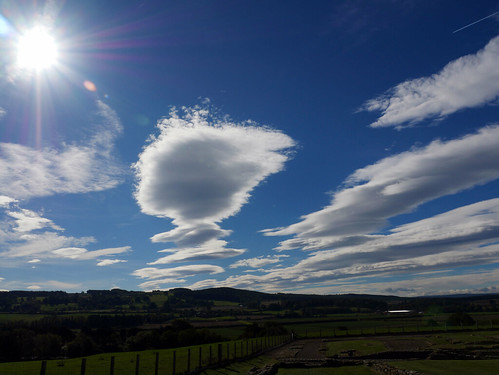
There is a single Truth but the wise call it by different names.
Rig Veda

Tags: Cherie's Place Thought, Corbridge Roman Town, enlightenment, Light, Northumber- land
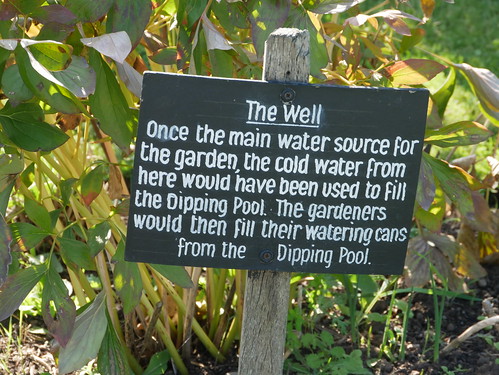
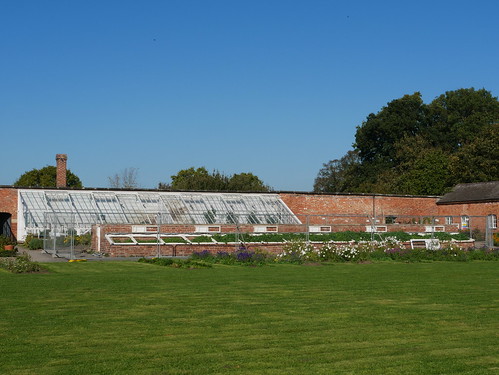
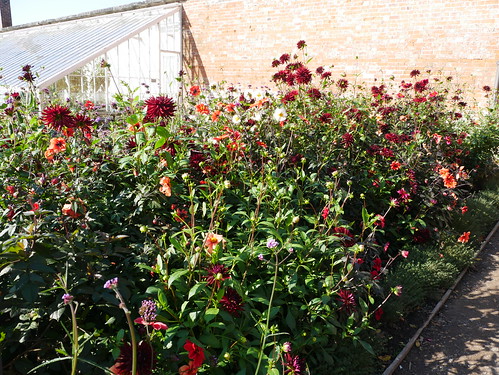
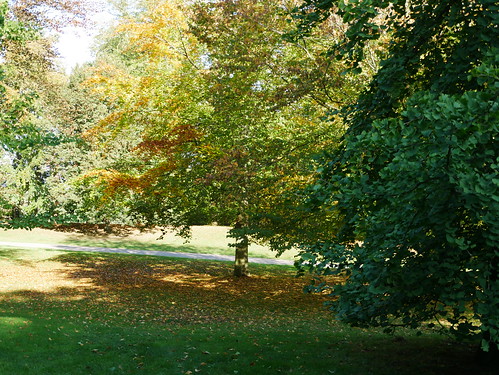
…Leads to a sunny excursion to Attingham Park



Tags: Attingham Park, me, National Trust, Portrait, Self Portrait
Unfortunately the duty manager that we had chatted to on the first night of our stay was not on shift so we were unable to say goodbye or thank her. We checked out after breakfast and headed to Corbridge Roman Town.
During our journey, just after we had left Jedburgh, we turned a corner to be confronted by a large bull standing sideways on our side of the carriageway. We slowed down and gently drove around him. He was slobbering at the mouth and looking at us disdainfully as we did so. As we passed by we noticed another bull on the road, looking very much as if he had escaped from a field. Behind him, in the field, were a large number of cows congregating in the corner of the field near to the bull.
We thought that bulls in the road were an accident waiting to happen so we parked in a safe place and phoned the police to report the problem.
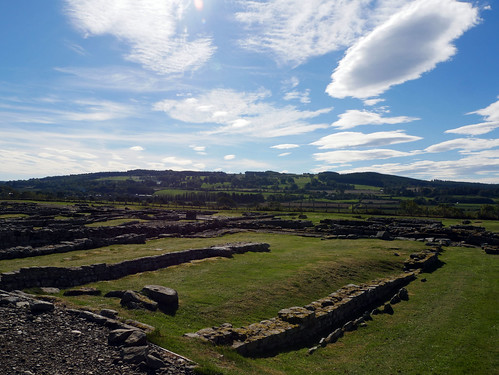
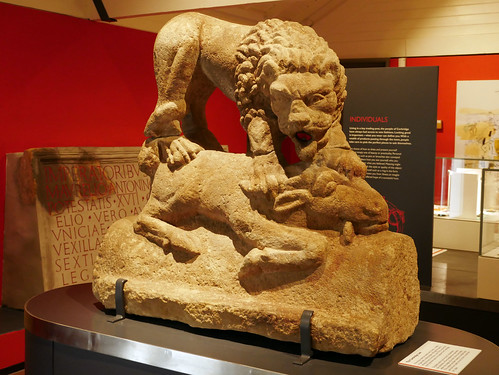
Corbridge Town is part of Hadrian’s Wall. Next to the town’s Roman remains is an excellent museum displaying Roman artifacts, the Corbridge Hoard and a fine stone statue of a lion atop its prey.
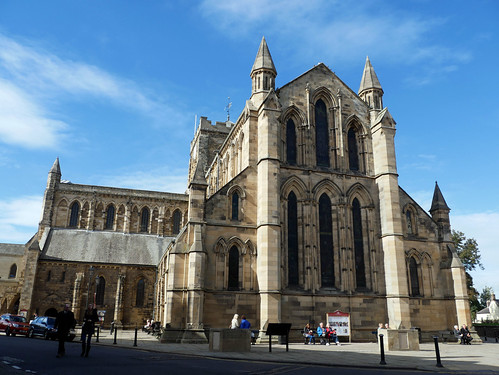
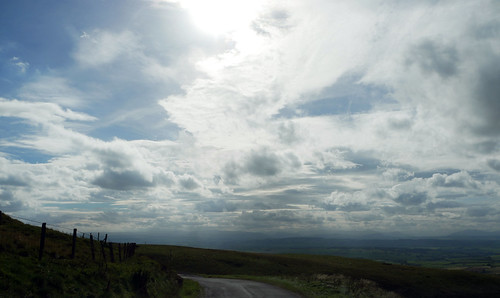
When we had finished looking around, we drove to Hexham, which is close by, for lunch. We had a brief look around Hexham before continuing our journey. Our route took us through beautiful scenery with spectacular views. At one point there was a diversion which led to the journey taking longer than expected necessitating a brief stop at Killington Lake services to stretch our legs and enjoy a reviving cup of tea.
Tags: Corbridge Roman Town, Hexham, Killington Lake, Northumber- land, The Collingwood Arms, Vacation