Blessed John Wall

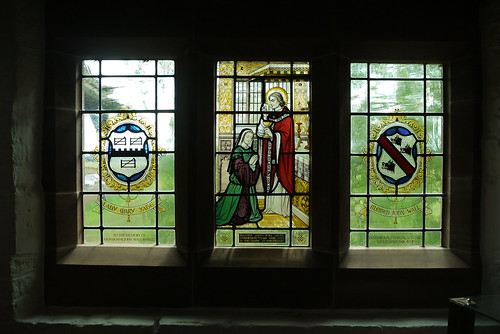
Saint John Wall, O.F.M., (1620 – 22 August 1679) was an English Catholic Franciscan friar, who is honored as a martyr.

He was born in PrestonLancashire. When of age, he entered the English College, Douai (in modern-day northern France) in 1641, and was ordainedCatholic priest in 1645. He returned to his homeland for several years, saying Mass for the Catholics who stayed loyal to the papacy. He returned to Douai and there he entered the Order of Friars Minor, taking the name Friar Joachim of St. Ann. He was soon named Master of novices, serving in that office until 1656, when he returned to England, settling in Worcestershire. There he became a Governor (Six Master) of the Royal Grammar School Worcester.

In 1678, after 22 years of ministry to the Catholics of the nation, he was apprehended under suspicion of being a party to the Titus Oates plot and sent to the Worcester jail. His trial was on 25 April. After being sent to London he was brought back to Worcester and executed for being a Catholic priest and exercising as such.[1]

8 Comments CherryPie on Sep 15th 2017

Enlightenment

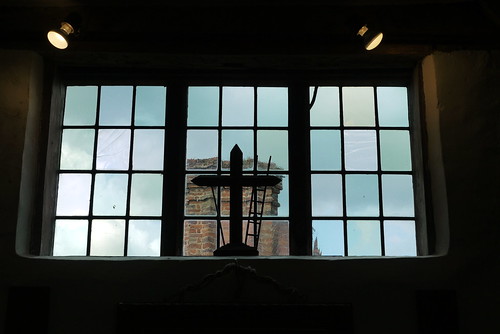
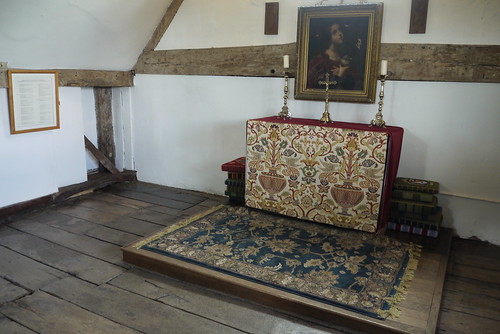
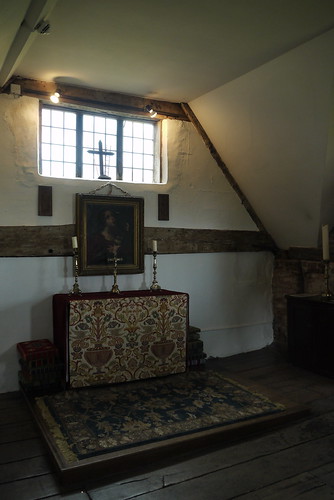
This chapel was used from about 1590 until the opening of the Georgian Chapel in 1743. It contains three features, from the 16th, 17th, and 18th centuries, which illustrate the gradual easing of persecution over the century and a half. At first all ‘Massing Stuff’ had to be concealed when not in use, and so, in the north-west corner, two floor-boards cover a small hide for vestments and church plate – a ’secret corner’, as opposed to a ‘conveyance’, which was a hide big enough for a man.*

Harvington Hall

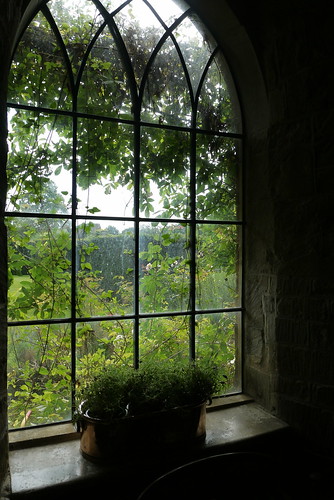
Small Chapel

During the 18th century it became the custom to use a chest-of-drawers as an altar and simply store the vestments in it. Against the north wall is a chest-of-drawers which was used in this way. and still is when Mass is said here. *

*From the Harvington Hall guidebook by Michael Hodgetts

10 Comments CherryPie on Sep 14th 2017

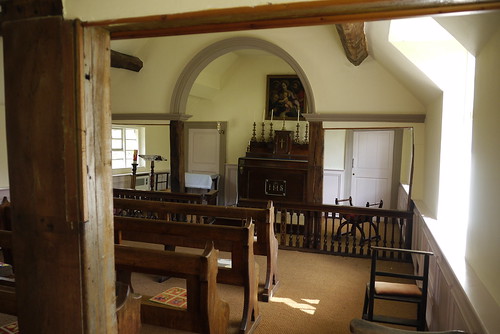
Georgian Chapel

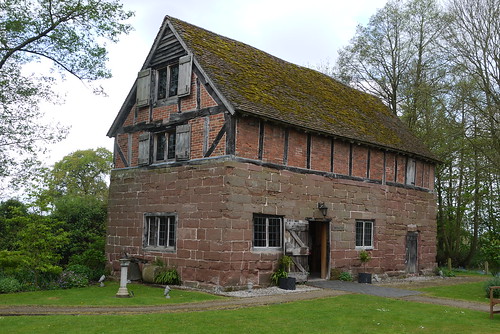
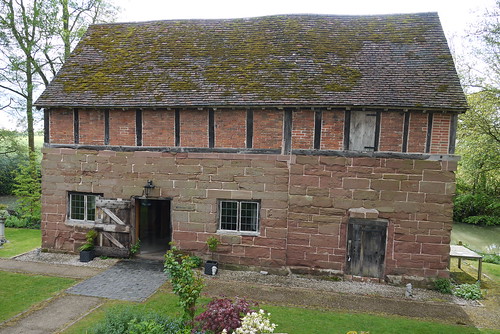
The upper floor of a brick building in the grounds of Harvington was converted into a chapel in 1743. The chapel is accessed by an external staircase.

Georgian Chapel

In 1823 this was badly damaged by fire and the original altar of oak was destroyed, together with some chalices and other relics which had been found inside it a few months before. After repairs it became the village school until 1913. iN 1986-7 it was restored and reopened for worship. It now contains a Georgian chamber-organ, altar and rails. Into the altar is set the original cracked and fire-blackened altar-stone. The altar-piece is the 17th-century Virgin and Child with Saints after Baroccio. In the sacristy is a Regency vestment-press which probably came from the chapel at Grafton Manor, just outside Bromsgrove. To the left of the chapel door is a school desk with registers of 1893-4, a photograph of the teacher, Miss Mary Kellerd, and the class taken about 1890, attendance certificates of 1904-5 and some Victorian school-books.*

Georgian Chapel

Georgian Chapel

Georgian Chapel

*From the Harvington Hall guidebook by Michael Hodgetts

4 Comments CherryPie on Sep 13th 2017

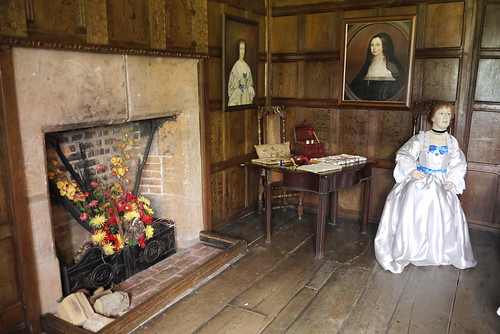
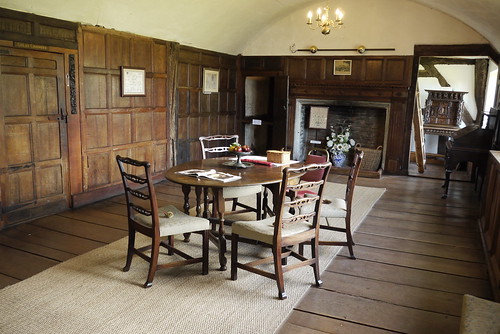
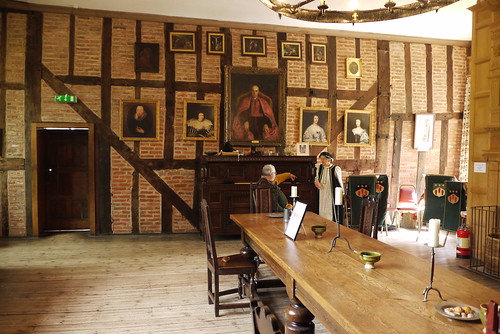
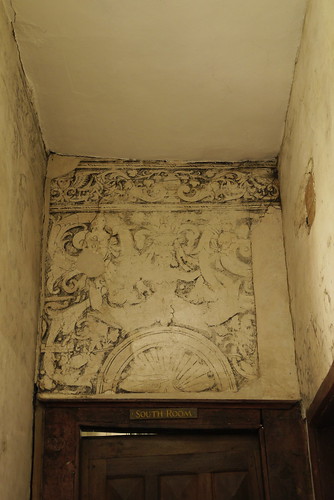
Harvington Hall

Harvington Hall

Harvington Hall

Harvington Hall

Harvington Hall

Harvington Hall

Harvington Hall

Harvington Hall

Harvington Hall

Harvington Hall

Harvington Hall

8 Comments CherryPie on Sep 12th 2017

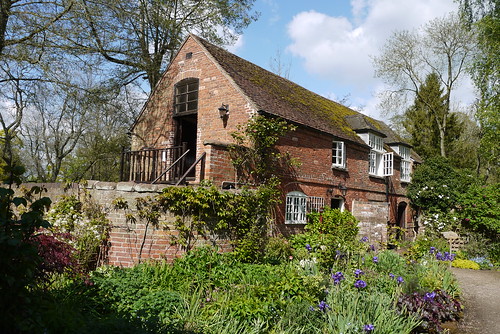
The Malt House

The malt house was originally an Elizabethan building of two builds, which during the 18th century was converted for malting. In 2008-9 is was restored as a visitor centre.

On the ground floor are the malting-kiln, an audio-visual programme on the Hall, an explanation of the processes of malting and brewing, and an exhibition of life on the estate. The centre piece of this is a map of the parish commissioned by Sir Robert Throckmorton in 1745-6 and drawn by the surveyor Robert Thorp. With it are a circular emblem of the Labours of the Twelve Months and drawings of men and women who then worked on the estate. The maltster is Randall Bagnall, who leased the Hall Farm from Sir Robert Throckmorton in 1745 and whose descendents were still here at the time of the census in 1841.*

The Malt House

*From the Harvington Hall guide book by Michael Hodgetts

6 Comments CherryPie on Sep 11th 2017

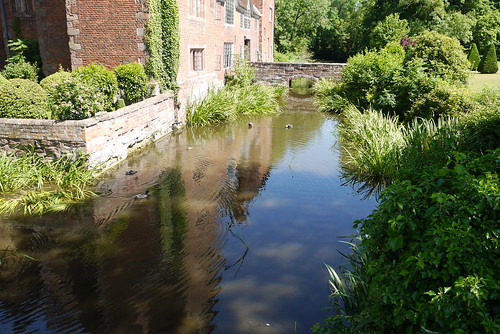
If you have a garden and a library, you have everything you need.

Cicero

Broughton Castle

15 Comments CherryPie on Sep 10th 2017

…Priest-Hole Maker

Synopsis (from the back of the book):

During the reigns of Elizabeth I and James I it was high treason, and therefore meant death, to be a Catholic priest in England. It was consequently vital that there be somewhere to hide when the pursuivants came battering at the door. One name is prominent in the construction of priest-holes – that of Nicholas Owen. A very short and later crippled man, he built the majority of these shelters, so saving the lives of untold numbers of priests and fugitives. His early apprenticeship as joiner and his knowledge of construction served him will as he burrowed into walls and constructed near-invisible entrance holes. Although a well-know figure in Recusant studies, and almost invariably mentioned in histories of the Gunpowder Plot, this is his first detailed biography.

St Nicholas Owen was born in Oxford, the son of a carpenter. Two of his brothers were to train as Catholic priests on the continent. A third, Henry, the first apprentice at what was to become the Oxford University Press, went on to assist the Mission with the production of Catholic books and pamphlets. Nicholas was himself apprenticed to and Oxford joiner in 1577.

Acting as a servant to Fr Henry Garnet SJ for nearly twenty years, Owen had many adventures, narrowly evading capture, and assisted in the escape of the Jesuit Fr John Gerard from the Tower of London in 1597. St Nicholas was tortured at the Poultry Compter in 1594 but later released. He was finally taken in one of his own priest-holes during the rigorous pursuit of Catholics that followed the failure of the Gunpowder Plot, and died upon the rack in the Tower of London in 1606.

Evidence of St Nicholas Owen’s work is still visible in contury houses and mansions across England, and recent research has unveiled greater detail of his fascinating career assisting the English Mission aat the close of the 16th and beginning of the 17th centuries.

Review:

This fascinating account of both Nicholas Owen and his construction of priest-holes is well worth a read. The book also gives accounts of Jesuit priests and the Catholic families that helped and concealed them from pursuivants. The content is quite graphic at times, detailing hanging and torture procedures. We are told of Nicholas’ early life, his work in creating the hides right through to his torture, death and beyond to when he became one of the forty-martyr saints who received canonization in 1970. The book is fully illustrated with black and white photographs and diagrams of the hides, houses and some of the key players of this period in history.

8 Comments CherryPie on Sep 8th 2017

« Newer Posts - Older Posts »