Delightful sunsets over my garden.

Picking up my new car today (collage of the old and new).

Friday Night Fish was delicious 
Random thoughts and photos of my journey through life…
Delightful sunsets over my garden.
Picking up my new car today (collage of the old and new).
Friday Night Fish was delicious
10 Comments CherryPie on Sep 22nd 2017
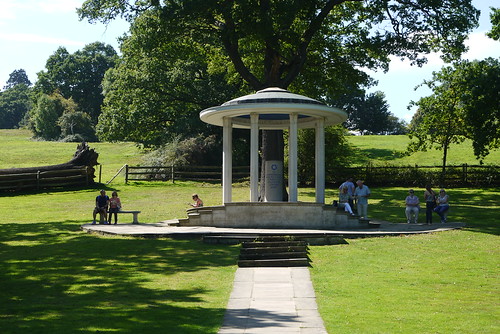
Runnymede, the birthplace of democracy.
THE MAGNA CARTA TRUST
The memorial and the land on which it stands is vested in the Magna Carta Trust under the chairmanship of the Master of the Rolls. The principal object of the Magna Carta Trust is the perpetuation of the principles of Magna Carta. The Trust also maintains and cares for the up-keep of the Memorial which was commissioned by the American Bar Association.
THE AMERICAN BAR ASSOCIATION MEMORIAL TO MAGNA CARTA
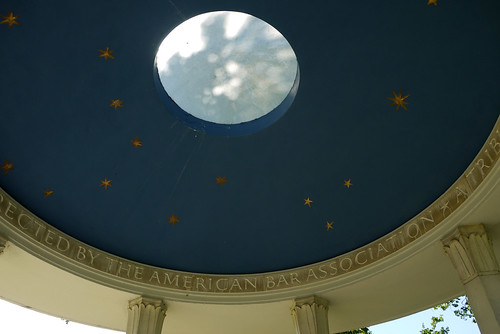
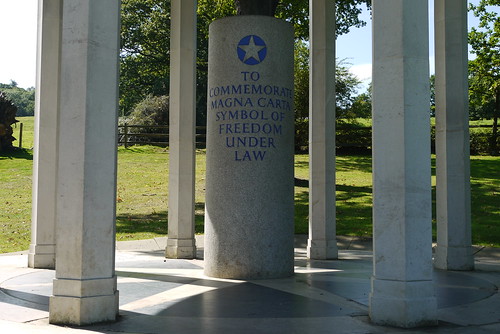
The memorial was designed by Sir Edward Maufe RA and dedicated on the 28th July 1957 in ceremonies attended by over 5,000 people. Built of Portland Stone and supported on eight octagonal pillars the Memorial is a domed classical Temple in the Greek Style. In the centre is a pillar of English Granite inscribed:
‘TO COMMEMORATE MAGNA CARTA
SYMBOL OF FREEDOM UNDER LAW’
Surrounding the memorial are Eight English Oak Trees. Two further oak trees on either side of the path were planted by HRH the Duke of Gloucester in 1987 and the Prime Minister of India in 1994.
MAGNA CART THROUGHOUT THE AGES
After the third and final amendment in 1225 by King Henry III, the Magna Carta was confirmed in 1297 by King Edward I and placed on the first or ‘great’ roll of English Statute thus becoming the first constitutional document in the World. It has throughout the Ages formed a basis for law and democracy in the civilised world. Seen by every Englishman as a safeguard for their constitutional rights against unjust and arbitrary rule, the tenets of the Magna Carta have been upheld and used extensively throughout history.
During the Tudor and Stuart reigns of the 16th and 17th centuries religious intolerance and persecution was rife. By the early 1600’s Puritans no longer tolerated by the Church and Crown set off to seek a new life of religious tolerance in the new world of the American Colonies. In 1620, upon the Mayflower, the Pilgrim Fathers set sail from Plymouth taking with them a copy of the Magna Carta. The principles of the Charter granting – ‘Freedom under the Law’ – went on to form the basis for the Constitution of the United States and later the Bill of Rights, of which Thomas Jefferson said:
‘ALL MEN ARE CREATED EQUAL IN LIFE, LIBERTY
AND IN THE PURSUIT OF HAPPINESS.’
This pursuit of equality and liberty as laid down in the Magna Carta brought about the abolition of the Slave Trade by William Wilberforce and President Abraham Lincoln.
Magna Carta is still, in the twentieth century, some 780 years after its inception forming the basis for Human Rights. Its passages were quoted by Nancy Astor in the battle for votes for women during the Suffragette Movement of the early 1900’s. The principles of Magna Carta formed the basis for Human Rights during times of war under the Geneva Convention and in times of peace in the Universal Declaration of Human Rights adopted on the 10th December 1948 by the General Assembly of the United Nations. The constitutions of India and the emerging democracies of Eastern Europe have enshrined key elements and principles first established by Magna Cart.
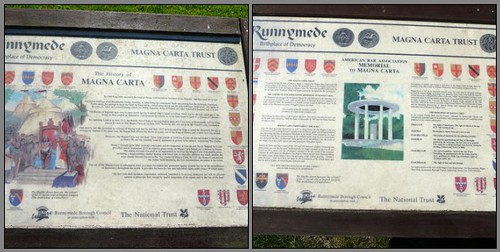
Information about the Magna Carta Trust can be found here.
8 Comments CherryPie on Sep 21st 2017
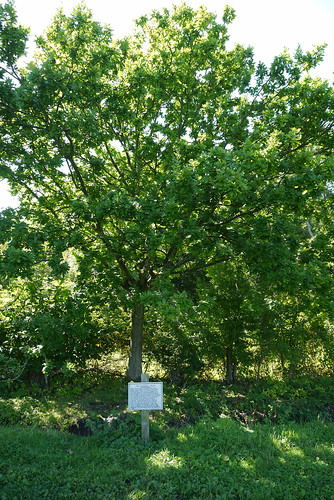
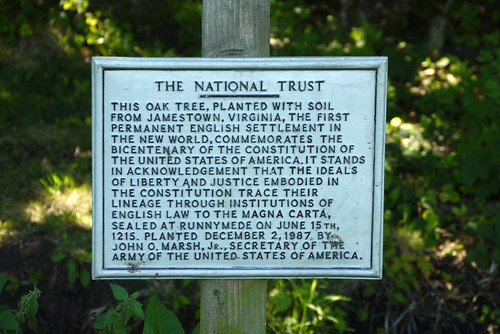
This oak tree, planted with soil from Jamestown, Virginia, the first permanent English settlement in the New World, commemorates the bicentenary of the constitution of the United States of America. It stand in acknowledgement that the ideals of liberty and justice embodied in the constitution trace their lineage through institutions of English law to the Magna Carta, sealed at Runnymede on June 15th, 1215. Planted December 2, 1987 by John O. Marsh, Jr., Secretary of the Army of the United States of America.
12 Comments CherryPie on Sep 20th 2017
14 Comments CherryPie on Sep 19th 2017
For with thee is the fountain of life: in thy light shall we see light.
Psalms 36:1:9 (KJV)
10 Comments CherryPie on Sep 17th 2017
Bear with me…
Content coming soon
Update 18/09/17 – links to currently uploaded posts added below. I have some posts yet to be written. I also need to add an intro to this post
Update 25/07/23 – I still need to write the intro 
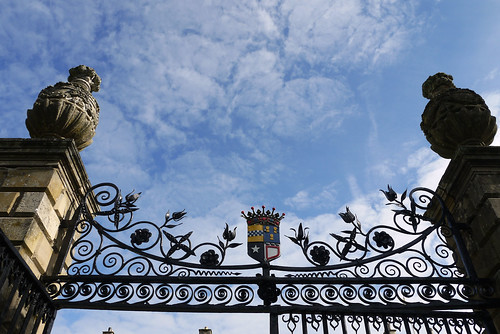
Imprisoned – John Gerard, Catholic Priest, 1597
John Gerard’s story told in the Salt Tower, Tower of London
The Autobiography of a Hunted Priest by John Gerard
Book Review
St Nicholas Owen Priest-Hole Maker by Tony Reynolds
Book Review
Glass window dedication at Harvington Hall
A refuge for Catholic priests
A safe house for Catholics with an chapel in the attic and what may have been secret access to the chapel
An Old Catholic family provides refuge for Charles I
Harvington Hall – Priest Hides
A tour of the priest hides in pictures and words
Attic chapel with a hide for ‘massing stuff’
Guesthouse with a secret tunnel to the nearby Priory – Used by Lord Lovelace of Hurley (a plotter of the ‘Glorious Revolution’)
History, Lord Lovelace connection and secret tunnels.
Dorney Court and its Recusancy Connections
This house reveals a recently discovered priest hole that is thought to be connect to Burnham Abbey via a secret passage.
The Old Bishop’s Palace – Ely
A prison for 32 Catholic recusants between 1588-97
After King Henry VIII parted from the Church of Rome and declared himself Head of The Church of England missionary priests were able to continue their teachings in Arundel.
An account of the Gunpowder Plot
Habington’s chest in the Worcester City Art Gallery and Museum
The Birthplace of Guido Fawkes
Guido Fawkes, was caught in the basement of the Houses of Parliament as he prepared to ignite hidden barrels of gunpowder.
4 Comments CherryPie on Sep 17th 2017
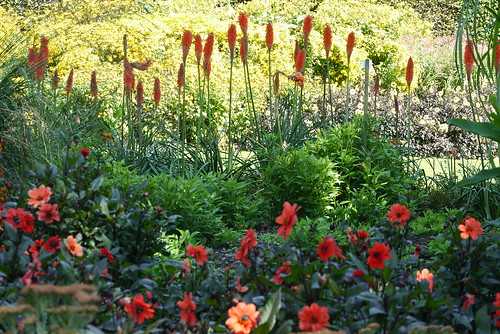
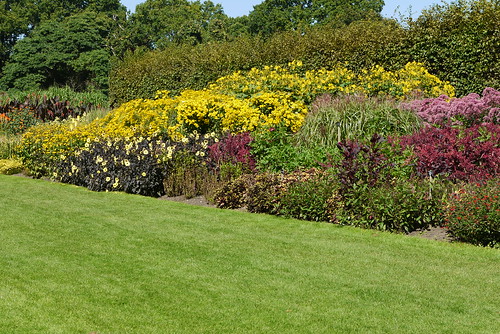
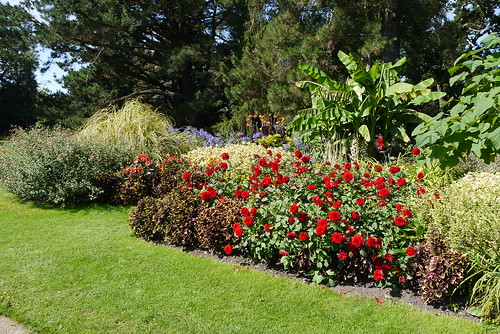
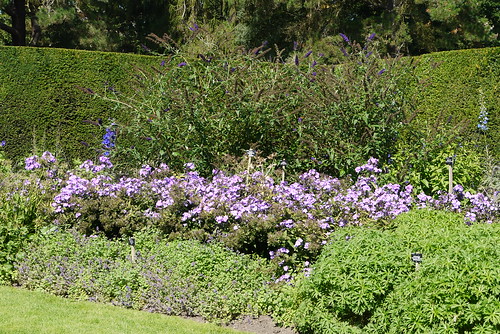
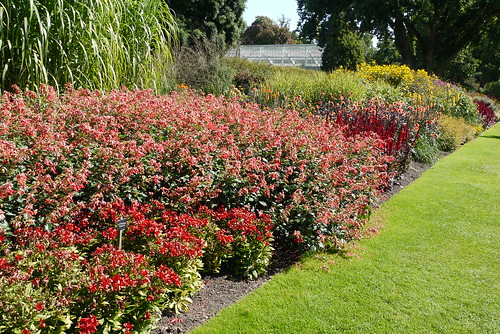
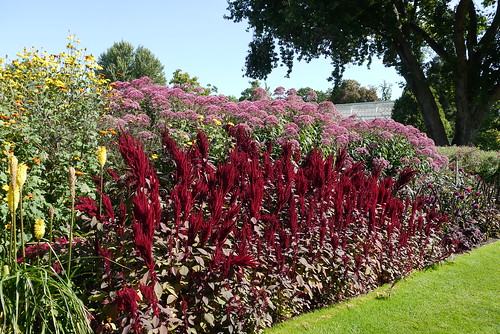
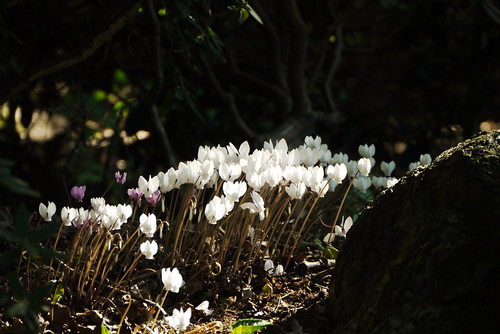
The Savill Garden is in situated in Windsor Great Park and was created by Eric Savill who, with a few staff started work on the garden in the winter of 1932.
Eric Savill gained the permission and support of the reigning monarch, George V, to undertake this new enterprise and a site next to an existing tree nursery – Parkside – was selected. Though not immediately obvious, the site was well chosen as the soil was generally of a sandy nature – easily worked and quick to warm up in spring – and fine forest trees, particularly the majestic oaks, provided an invaluable framework for the new garden.*
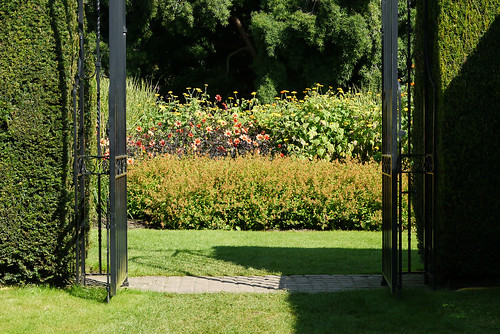
In 1951 George VI decreed that the Bog Garden should henceforth be known as The Savill Garden in recognition of Eric Savill’s great achievement, which was followed by a knighthood in 1955.*
It is a garden for all seasons, each bringing a different delight. My photographs show the garden in late summer.
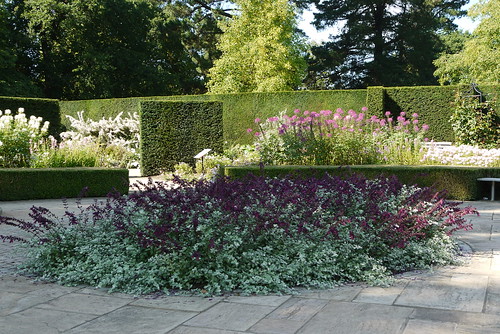

*From The Savill Garden guidebook by Jarold Publishing and The Crown Estate Commissioners 2016
16 Comments CherryPie on Sep 16th 2017