The Churches Concervation Trust guide book for St Andrew’s Church at Wroxeter provides and informative introduction to both the Wrekin and Wroxeter.
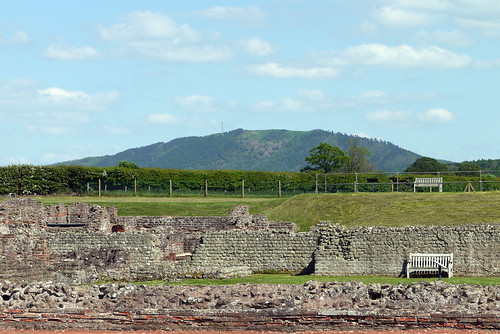
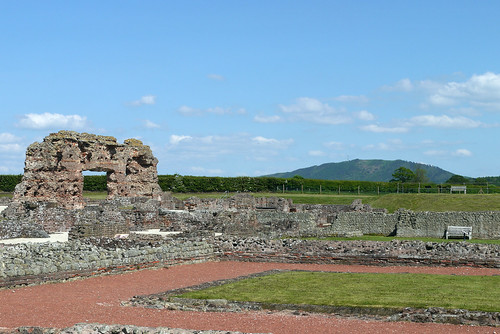
The name Wroxeter appears to mean ‘fort by the Wrekin’. This hill, which is prominent for miles around, has an Iron Age fort at its crest and the Celtic name for it is thought to have been Wreocen. When the Romans came they founded a large fortified town five miles (8km) away from the fort and close to where Watling Street crosses the River Severn. This ‘castrum’ supplies the second half of the name.
The Roman name for Wroxeter is Viroconium, also an echo of Wreocen. Their town was one of the largest they built in England, smaller only than London, St Albans and Cirencester, and became an important provincial capital. It extended to the Severn beyond the church and nearly as far in the other direction towards the present A5 road.
In his article in the June 2013 edition of the Wrekin News, George Evans refers to ‘The Wrekin’ as ‘The little mountain with many secrets’. The article explains how he persuaded the Royal Geographical Society (RGS) that The Wrekin was worthy of being included in their 100 best walks in Britain. His article mentions the local folk law, history and geology of the surrounding area. He explains that the hill still retains some of its secrets.
The Calendar stones are an enigma. They don’t look natural but I’m told no archaeologist has ever investigated them. Surely it’s not accidental that a shaft of light shows each equinox is it? The hill-fort was started about 3,500 years ago (we think), extended 2,500 years ago and disused after the Romans invaded. That’s 1,500 years. How was it built, who used it and for what purpose? There’s a nice little story to tell about the Magic Tree in the Druid’s Circles on the Little Hill and there are tales about the Devil’s Coach-house, where the four winds meet and King of the Wrekin.
- George’s walk – A little mountain with many secrets
- More from me on The Wrekin - The Wrekin Hill
18 Comments CherryPie on Aug 14th 2014
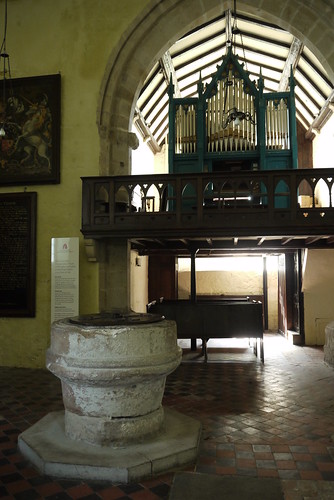
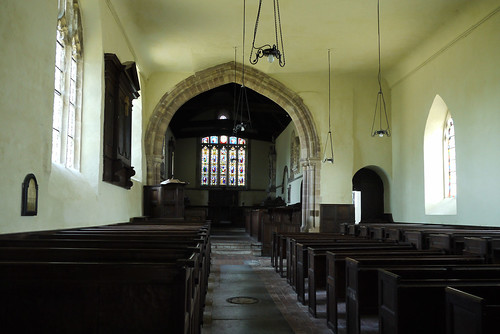
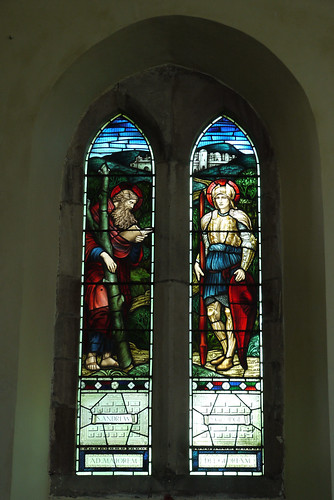
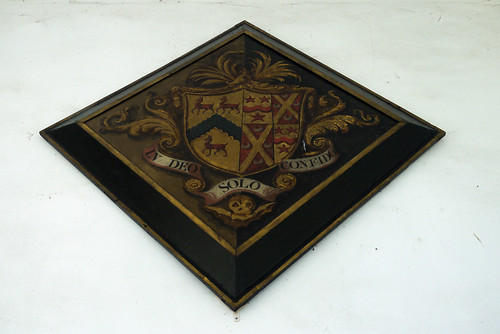
Just inside the front door of the church stands a huge font which is thought to be part of a Roman column. The organ was originally built by Charles Brindley in 1849, but little now remains from that date. The knave is furnished with box pews, the pulpit is Jacobean and the altar rails are dated 1637.*
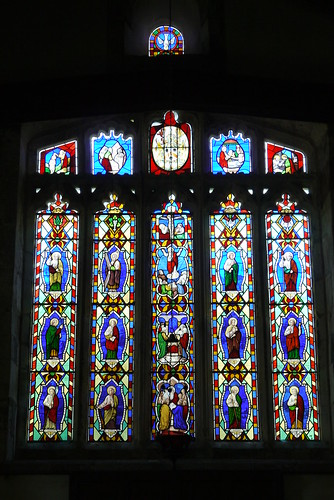
*From The Churches Conservation Trust guide book.
18 Comments CherryPie on Aug 13th 2014
Some of you may recall that I have had two failed attempts at taking photographs of St Andrew’s Church. On my first attempt I was nearly run over by a driver who had not noticed I was walking along the country lane.
Afterwards I decided to make the short walk to St Andrew’s church in the nearby village. It has an interesting history and it is a long time since I visited. At one stage I was in danger of getting knocked over by an oncoming vehicle whose driver only slowed the vehicle down and came to a halt when the driver of another vehicle coming in the other direction slammed his brakes on and pulled to one side. The first driver clearly hadn’t noticed me until then! I decided that discretion was the better part of valour and retreated back to the ruins. I will visit the church another day by car.
My second attempt turned out to be a rescue mission, two rooks had become trapped within the church and needed releasing. The few photographs that I took of the outside of the church whilst waiting for the rooks to leave the building were overexposed because I had inadvertently pressed a button on my camera.
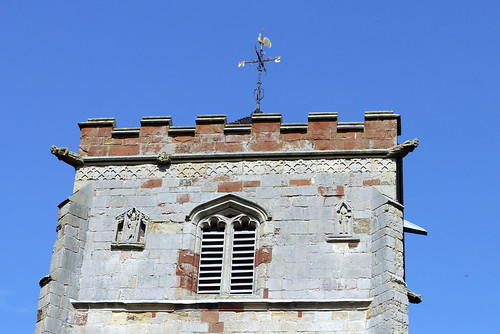
The church was first mentioned in the Domesday Book (1086), though it must have existed for some time before that. The building was greatly extended in the late 12th century. The tower was built in stages and carvings incorporated into it are thought to come from the nearby Haughmond Abbey after its dissolution in 1539. Further alterations and additions were made to the structure, the latest being the present porch which dates to 1870.
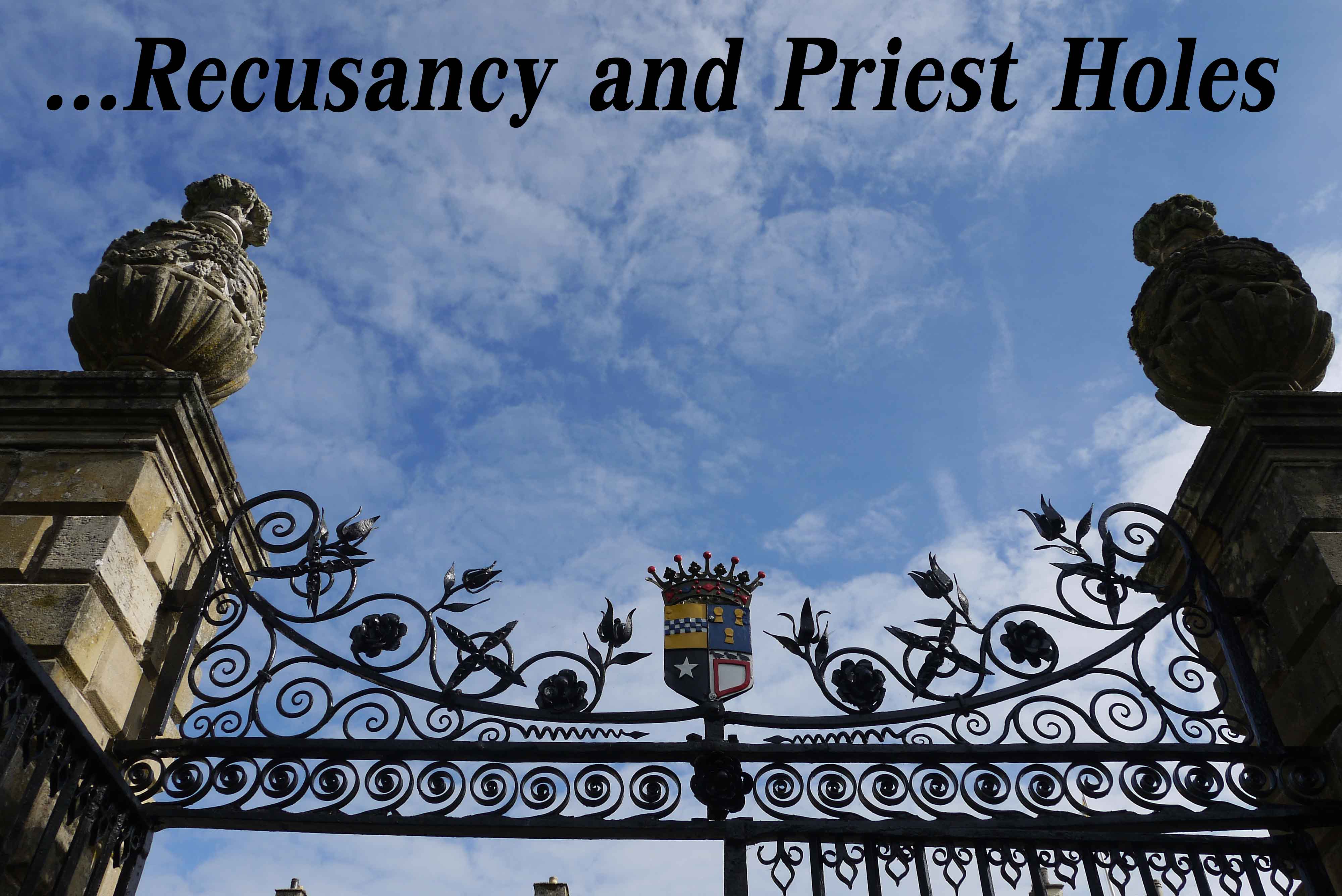
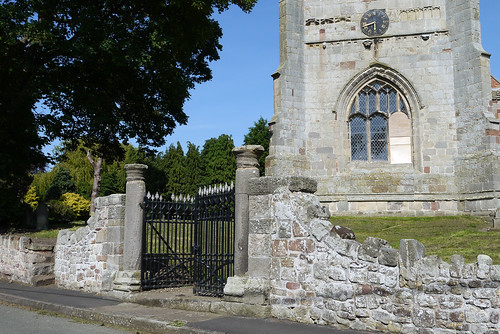
The main entrance to the church is through a gateway that is formed by a pair of columns from the nearby Roman site of Wroxeter. Near to the gate is a stile that also doubles as a mounting block for horses.
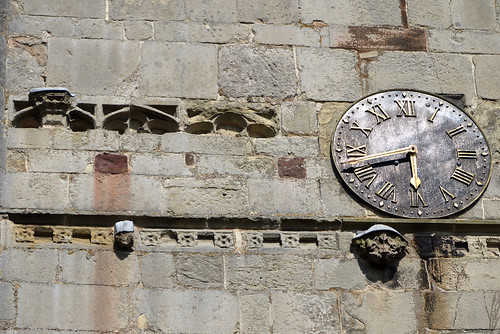
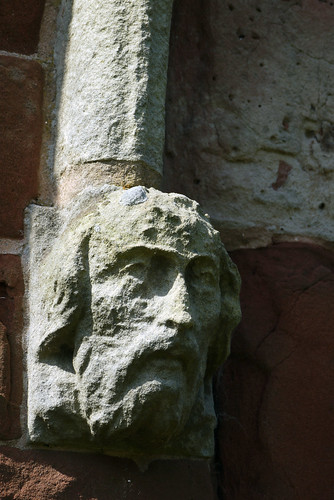
*Information from the Churches Conservation Trust guide book.
18 Comments CherryPie on Aug 12th 2014
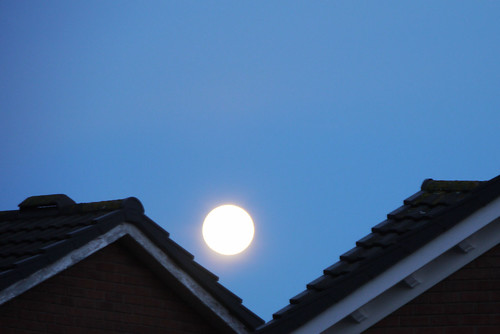
Yesterday the tail end of Tropical Storm Bertha drifted over the UK in her death throws. We had torrential rain overnight and into the morning, then there was a brief sunny interlude followed by more rain and gusty winds. It didn’t look promising for viewing the so called ‘Supermoon‘…
I was pleasantly surprised when the clouds lifted enough for the moon to become visible. My camera decided to be difficult and no matter what setting I chose, it refused to focus and did not allow me to press the shutter to take a photo. I persevered… I even succumbed to taking some photos with my compact camera…
The moon looked bright and beautiful, but not exactly larger than usual. My photos show a bright globe with no shadow details on the moon, that is how it appeared when viewing by the naked eye too. So although the sky appears not to be cloudy there must have been a slight haziness, slightly obscuring the moon.
16 Comments CherryPie on Aug 11th 2014
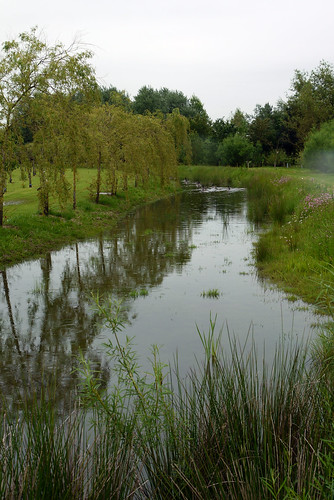
No man ever steps in the same river twice, for it’s not the same river and he is not the same man.
Heraclitus
18 Comments CherryPie on Aug 10th 2014