…The Coach House at Crookham.

After an unexpected summer day in Tynemouth it was time to say goodbye to both Newcastle and Tynemouth and journey to our next destination.
Random thoughts and photos of my journey through life…
…The Coach House at Crookham.
After an unexpected summer day in Tynemouth it was time to say goodbye to both Newcastle and Tynemouth and journey to our next destination.
2 Comments CherryPie on Nov 10th 2013
…at Tynemouth priory and Castle.
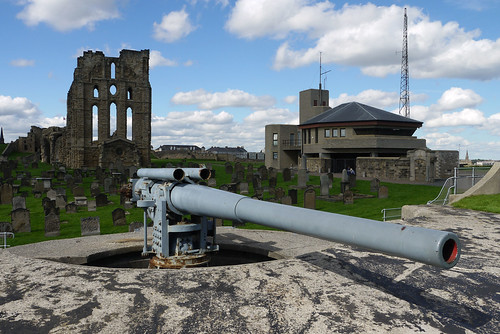
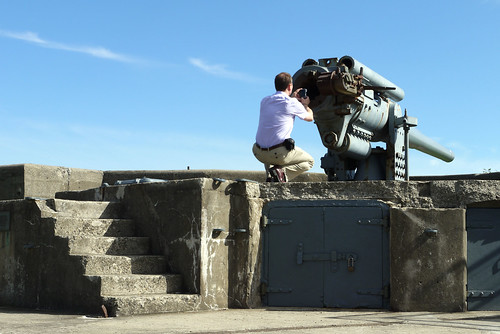
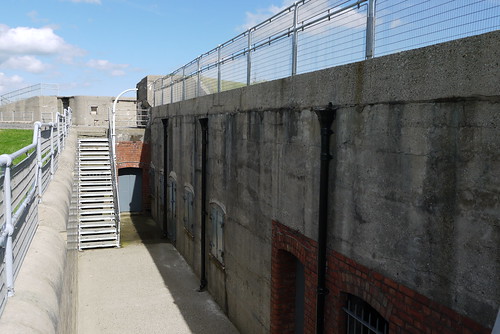
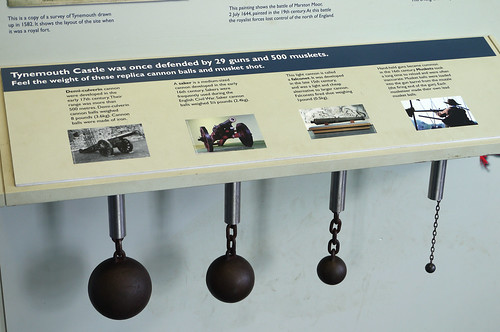
Because of their strategic position commanding the approaches to the river mouth, the artillery defences of Tynemouth remained in use between the mid-16th and mid-20th centuries. Like all English coastal defences, they were not always adequately armed, supplied or manned, being made ready or updated only when conflict was imminent.
From about 1881, however, Tynemouth was redeveloped as part of a modernized system of coastal defences to protect the Tyne and its approaches. A line of gun positions, constructed between 1891 and 1905, remains at the tip of the headland. These were manned for defence and training until the new science of guided rocketry brought an end to all coastal artillery in the British Army in 1956.*
*From the Tynemouth Priory and Castle English Heritage Guidebook.
8 Comments CherryPie on Nov 9th 2013
More ‘Round’ can be found in the gallery.
2 Comments CherryPie on Nov 9th 2013

Today Google celebrates the 129th birthday of Rorschach, the Swiss Freudian psychiatrist best known for his inkblot test where people are asked what they see in the inkblot that is shown to them. The Telegraph reports:
Hermann Rorschach, the psychologist, has been celebrated with an interactive Google doodle.
The Google doodle features a black and white drawing of Rorschach, armed with a pen and notepad and a pair of hands holding up an inkblot.
Today, November 8, is the 129th birthday of Rorschach, best known for his inkblot test where people are asked to say what they see, their answers revealing unconscious aspects of their personalities.
People who support the theory of the inkblot test believe it can reveal hidden traits that people themselves are not aware of, for example with focusing on the edges of images seen as a sign of an obsessive personality.
Rorschach was born on November 8, 1884, in Zurich. He was known by the nickname ‘Klecks’ meaning inkblot, to his friends, because he enjoyed making pictures out of inkblots – klecksography.
He was encouraged to express himself through art by his father, an art teacher.
But Rorschach could not decide between a career in art or science and eventually decided to go to medical school in Zurich.
As a medical student he used his love of inkblots as a child to start to shape his career.
The psychoanalyst movement was emerging and he began to show children the images to analyse their different responses and develop his theory.
In 1921 he wrote a book, Psychodiagnostik, which formed the basis of the inkblot test and became successfully very quickly because of the variety of readings of behaviour the tests seem to give.
However psychologists have since discredited the theory of the father of two.
Google invites you to share what you see in the images. I think the one above speaks for itself and it reminds of the time I did the test out of curiosity. One of the images stood out and reminded me of the Balrog in Lord of the Rings. You can find my previous post on the inkblot test and a summary of what it reveals about me here.
8 Comments CherryPie on Nov 8th 2013
…The Percy Chantry
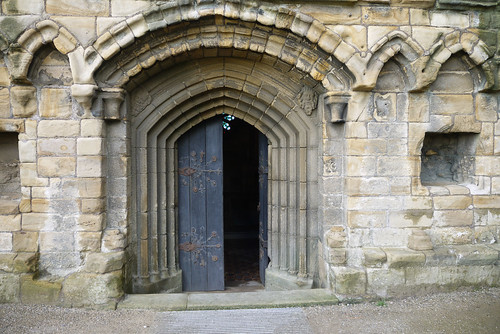
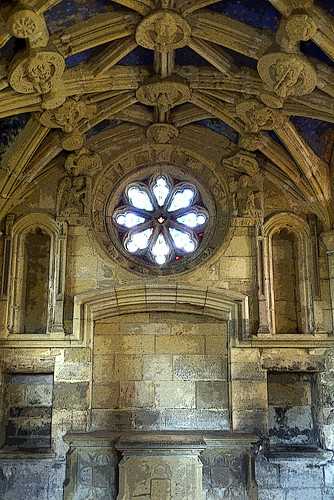
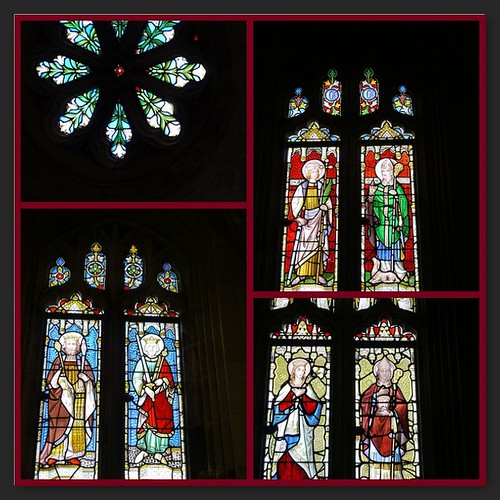
The Percy Chantry was built in the 15th-century and is the only part of the priory church to survive complete, although what we see today is the product of renovations. The Chantry has an intricate ceiling composed of intersecting ribs with 33 carved bosses.
19 Comments CherryPie on Nov 7th 2013
…The New Coastguard Station.
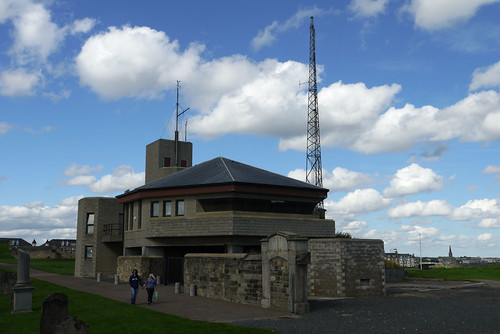
The new coastguard station was built in 1980 and closed in 2001 due to advancing technology. BBC News reporting 28th September 2001:
Coastguard responsibilities for the North East pass to Humberside on Friday with the closure of the Tyne Tees station at Tynemouth.
New digital equipment has been installed at a station in Bridlington, which will monitor the waters from Berwick to the Humber estuary.
The closure is the third to take place as part of a national restructuring.
Objectors have said the closure could put lives at risk, but Maritime and Coastguard Agency (MCA) officials said the new equipment will improve communcations.
Tynemouth Station is a familiar site to local people, perched on cliff tops next to the ancient Tynemouth Priory.
4 Comments CherryPie on Nov 6th 2013
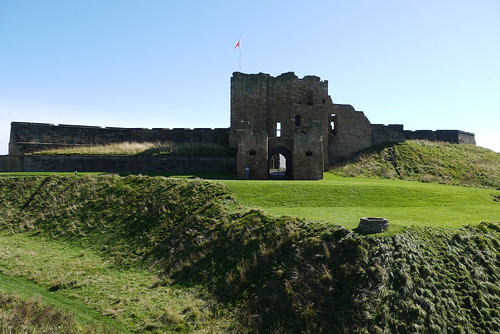
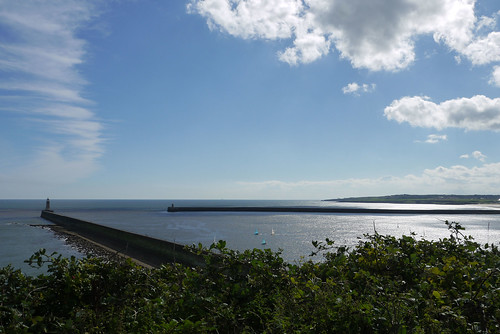
The site of Tynemouth Castle an Priory is rich in history:
The dramatic headland at Tynemouth is a natural fortress commanding the entrance to the river Tyne, the gateway to Newcastle. Connected to the mainland only by a narrow neck of rock and defined by tall cliffs, Tynemouth headland was virtually unassailable before the development of modern guns and has been occupied intermittently, as both a stronghold and a place of worship, for more that 2.000 years.
Remains of an Iron Age settlement have been discovered here but the first written record of occupation dates from the eighth century, when a monastic community was established. its wooden buildings were destroyed during the Viking invasions of the ninth and tenth centuries. The medieval ruins visible today belong to a second monastery, Tynemouth Priory, founded in the late 11th century and dedicated to St Oswine (d.651), whose body was preserved here in a rich shrine. King Henry VIII suppressed the priory in 1539 but the church nave remained in parish use until the late 17th century.
Because of its strategic value in protecting the mouth of the Tyne, the headland was fortified until the 1950s. A gatehouse, which still exists, was built as part of the defence in the 14th century. Over the centuries, the defences were adapted and added to – a barracks, governor’s house and a spectacular lighthouse were all built in the 17th century. These later bulidings have now gone, although 19th- and 20th century gun emplacements remain, a lasting reminder of the military importance of Tynemouth.*
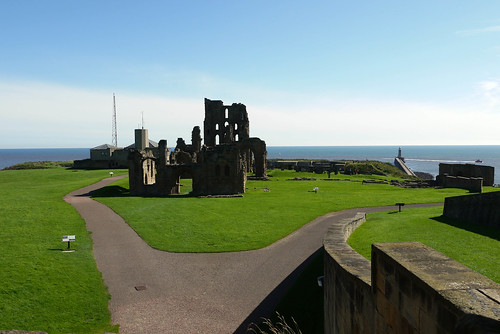
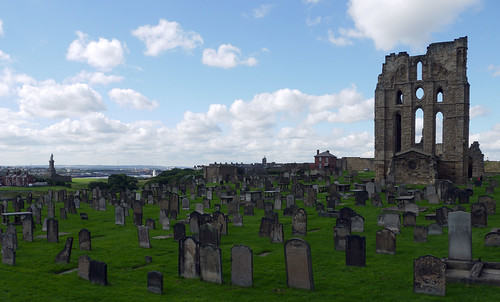
* Information from the English Heritage Tynemouth Priory and Castle handbook.
8 Comments CherryPie on Nov 5th 2013