…100 species that changed the world…
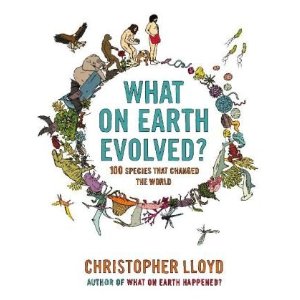 Synopsis (from book cover):
Why have creatures evolved as they are? which species have had the biggest impact on the world we live in? Where does humanity fit in?
Christopher Lloyd leads us on an exhilarating journey, from the birth of life on the early Earth to the present day, as he seeks answers to these fundamental questions. Along the way he reveals the extraordinary stories of the fifty most successful species that have evolved in the wild – such as slime, sea scorpions, dragonflies and dung beetles – followed by fifty species that have thrived as a result of man’s interference – from dogs, cats and camels to yeast, coffee and bananas.
The 100, species are finally scored and ranked in order of their impact on the planet, life and people. Which species comes top? How do life forms adapt to a world dominated by nearly 7 billion humans? What on earth evolved? exposes the struggle between the forces of nature and the mind of mankind for control of life, and the earth itself.
Review:
What on Earth Evolved? is the follow on volume from What on Earth Happened?, you can see my review of the first book here.
The book takes a unique approach to science, history, geography and nature by looking at 50 species that evolved in the wild without intervention and 50 species that have thrived due to man’s intervention. All types of species from large to small are included such as – algae, virus, fish, plants, animals and insects.
The book which is full of interesting and surprising facts is accessible and educational and will appeal to both the young and the old. The aim is to give an enriched understanding of history through the eye of the natural world and I think it achieves this aim. I found it very readable from cover to cover, but it is also a book you can just dip into or refer back to using the index and chapter headings. Most pages have colour illustrations which for me added to the enjoyment of the book.
The final part of the book where it lists the rank of impact of the 100 species chosen into a table of influence is designed to stimulate thought and debate. I can imagine sitting up late into the night with my friends discussing some of the species included in the book. One such topic may be the how the export of roses from the heart of Kenya has reduced a lakes’ water level 3 meters below minimum safety levels. Water accounts for 90% of a cut flower and these roses are being exported from one of the driest places on the planet to the worlds wettest countries in Europe.
I was lucky enough to be able to attend the fascinating lecture that launched the book, you can see my review of the launch here.
More information can be found on the book’s dedicated website, where you can also access the list of the 100 species ranked in order.
Note: The review is based on the hardback version, an abridged paperback version has recently been published.
Tags: Book, Book Review, Christopher Lloyd, Evolution, History, Planet earth, What on Earth Evolved