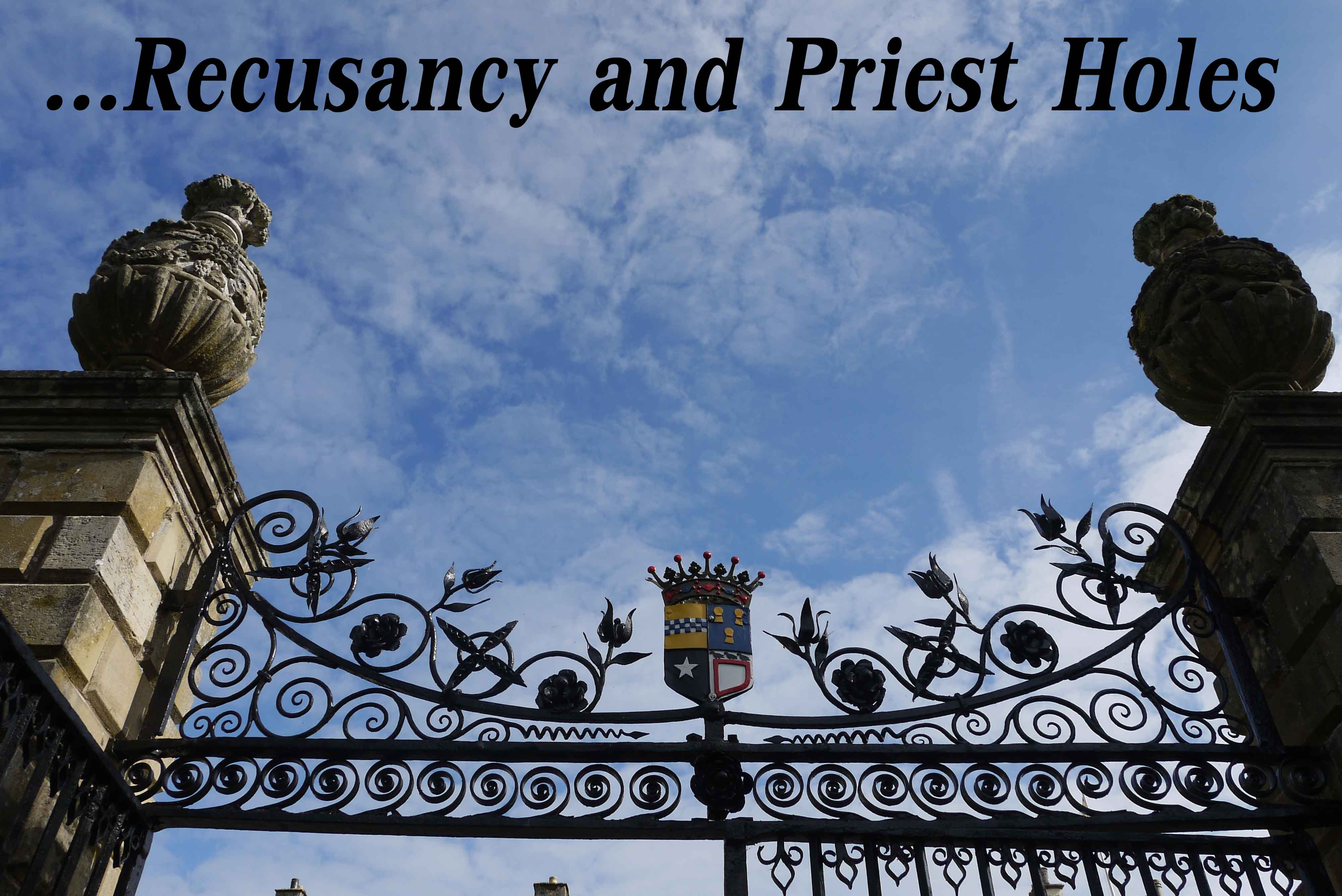
Both of these were taken when I visited Malmesbury earlier this year. You will have to look closely to see the bird in the second photograph.
I hope you all have a great weekend 


For more of this weeks PhotoHunt pictures check out tnchick.
Random thoughts and photos of my journey through life…
Both of these were taken when I visited Malmesbury earlier this year. You will have to look closely to see the bird in the second photograph.
I hope you all have a great weekend
For more of this weeks PhotoHunt pictures check out tnchick.
26 Comments CherryPie on Nov 20th 2009
I have been asked on a couple of occasions what the image is that shows in my blog header. The image is randomly selected so I am never sure which one people have seen. At the moment there are nine images from my holiday in Northumberland, starting from the top left this is a list of what they are; 1. Near Flodden, 2. Bamburgh, 3. Cragside Formal Garden, 4. Dunstanburgh, 5. Dunstanburgh, 6. Dunstanburgh, 7. Craster, 8. Flodden Battle Field, 9. Flodden Memorial
In December I am thinking of changing them to Christmassy images, but that will mean me getting out and about to take some suitable photographs.

Created with fd’s Flickr Toys
12 Comments CherryPie on Nov 20th 2009
I love the contrast between the bright blue of the water in the swimming pool and the deep green of the water in the upper lake.
In the early years of their occupation at Chartwell, the Churchills used to use the lakes for swimming. You can see the lower lake in this previous post of mine.
Then in the 1930s, Churchill arranged for the purpose built oval concrete pool. It is complete with concealed under ground boilers which heat the pool to 75F.

10 Comments CherryPie on Nov 19th 2009
 Synopsis (from book cover):
Humanity’s most ancient secret is about to be revealed…
In the sunburned deserts of eastern Turkey, archaeologists are unearthing a stone temple, the world’s most ancient building. When journalist Rob Luttrell is sent to report on the dig, he is intrigued to learn that someone deliberately buried the site 10,000 years ago, Why?
Only one man knows the secret – a secret so shocking it may threaten the social structure of the world – and he is intent on destroying the evidence before it can be recovered.
Spanning the globe from the ruined castles of Ireland to the desolate wastes of Kurdistan, Tom Knox’s intense and compelling thriller weaves together genuine historical evidence, scientific insights and Biblical mysteries into an electrifying tale that grips the reader mercilessly from beginning to end.
Review:
The book is an adventure story in the style of Indiana Jones, which cleverly intertwines two plots. One thread being based in Turkey around the site of the archaeological dig in Gobekly Tepe and the other thread starts off in the UK. The story covers secret cults/societies, live sacrifices and the different religions that were followed around the Gobekly Tepe region, but above all it is a murder mystery.
The book has many twists and turns, just when you think you have figured it out and are one step ahead of the author, you realise you weren’t because the story reveals something quite different to what you were expecting.
I loved the historical background to the book and it worked well as a mystery story, definately a page turner for me. So what was the Genesis Secret? For that you will have to read the book 
For details on the archaeological dig that inspired the novel, please see my previous post.
14 Comments CherryPie on Nov 18th 2009
This is a reprint of an article I originally posted on my Blogger blog earlier this year. I have just read the novel that the author of The Daily Mail article wrote after visiting this site. I thought new readers might interested in the historical background before I post a review of the book:
The Daily Mail are carried a very interesting article on an important archaeological discovery in Eastern Turkey. The discovery was made in 1994 by an old Kurdish shepherd, whilst tending his flock in the hillside:
The man looked left and right: there were similar stone rectangles, peeping from the sands. Calling his dog to heel, the shepherd resolved to inform someone of his finds when he got back to the village. Maybe the stones were important.
They certainly were important. The solitary Kurdish man, on that summer’s day in 1994, had made the greatest archaeological discovery in 50 years. Others would say he’d made the greatest archaeological discovery ever: a site that has revolutionised the way we look at human history, the origin of religion – and perhaps even the truth behind the Garden of Eden.
 In late 1994 following the discovery, archaeologist Klaus Schmidt went to the site of Gobekli Tepe to begin excavations. The article goes on to explain what he found at the site:
The site of Gobekli Tepe is simple enough to describe. The oblong stones, unearthed by the shepherd, turned out to be the flat tops of awesome, T-shaped megaliths. Imagine carved and slender versions of the stones of Avebury or Stonehenge.
Most of these standing stones are inscribed with bizarre and delicate images – mainly of boars and ducks, of hunting and game. Sinuous serpents are another common motif. Some of the megaliths show crayfish or lions.
The stones seem to represent human forms – some have stylised ‘arms’, which angle down the sides. Functionally, the site appears to be a temple, or ritual site, like the stone circles of Western Europe.
To date, 45 of these stones have been dug out – they are arranged in circles from five to ten yards across – but there are indications that much more is to come. Geomagnetic surveys imply that there are hundreds more standing stones, just waiting to be excavated.
So far, so remarkable. If Gobekli Tepe was simply this, it would already be a dazzling site – a Turkish Stonehenge. But several unique factors lift Gobekli Tepe into the archaeological stratosphere – and the realms of the fantastical.
The first is its staggering age. Carbon-dating shows that the complex is at least 12,000 years old, maybe even 13,000 years old.
That means it was built around 10,000BC. By comparison, Stonehenge was built in 3,000 BC and the pyramids of Giza in 2,500 BC.
Gobekli is thus the oldest such site in the world, by a mind-numbing margin. It is so old that it predates settled human life. It is pre-pottery, pre-writing, pre-everything. Gobekli hails from a part of human history that is unimaginably distant, right back in our hunter-gatherer past.
Schmidt speculates that bands of hunters gathered at the site over the years of it’s construction. The theory is supported by the flint arrowheads that have been found at the site.
 It was when the author of the article first arrived at the site that the theory that it might be the biblical Garden of Eden was first mentioned:
About three years ago, intrigued by the first scant details of the site, I flew out to Gobekli. It was a long, wearying journey, but more than worth it, not least as it would later provide the backdrop for a new novel I have written.
Back then, on the day I arrived at the dig, the archaeologists were unearthing mind-blowing artworks. As these sculptures were revealed, I realised that I was among the first people to see them since the end of the Ice Age.
And that’s when a tantalising possibility arose. Over glasses of black tea, served in tents right next to the megaliths, Klaus Schmidt told me that, in his opinion, this very spot was once the site of the biblical Garden of Eden. More specifically, as he put it: ‘Gobekli Tepe is a temple in Eden.’
The author goes on to describe humanity’s leisurely hunter-gatherer past where we picked fruit from trees, scooped fish from rivers and the rest of the day was for leisure. Then he explains how this lifestyle turned into the harsher life of farming. The stones depict scenes from the lush landscape before the land was destroyed by man:
There were herds of game, rivers of fish, and flocks of wildfowl; lush green meadows were ringed by woods and wild orchards. About 10,000 years ago, the Kurdish desert was a ‘paradisiacal place’, as Schmidt puts it. So what destroyed the environment? The answer is Man.
As we began farming, we changed the landscape and the climate. When the trees were chopped down, the soil leached away; all that ploughing and reaping left the land eroded and bare. What was once an agreeable oasis became a land of stress, toil and diminishing returns.
And so, paradise was lost. Adam the hunter was forced out of his glorious Eden, ‘to till the earth from whence he was taken’ – as the Bible puts it.
Of course, these theories might be dismissed as speculations. Yet there is plenty of historical evidence to show that the writers of the Bible, when talking of Eden, were, indeed, describing this corner of Kurdish Turkey.
The author then explains that a few years ago in the nearby Cayonu, archaeologists unearthed human skulls and an altar-like slab. This evidence of human sacrafice may hold the missing key as to why the stones were still in tact:
Around 8,000 BC, the creators of Gobekli turned on their achievement and entombed their glorious temple under thousands of tons of earth, creating the artificial hills on which that Kurdish shepherd walked in 1994.
No one knows why Gobekli was buried. Maybe it was interred as a kind of penance: a sacrifice to the angry gods, who had cast the hunters out of paradise. Perhaps it was for shame at the violence and bloodshed that the stone-worship had helped provoke.
Whatever the answer, the parallels with our own era are stark. As we contemplate a new age of ecological turbulence, maybe the silent, sombre, 12,000-year-old stones of Gobekli Tepe are trying to speak to us, to warn us, as they stare across the first Eden we destroyed.
Whether or not this is the site of the garden of Eden is a matter for debate, but either way it is a fascinating story and difficult to imagine anything quite so old.
14 Comments CherryPie on Nov 18th 2009
This is the north-east corner of the house, where visitors emerge after the tour. Although it can’t be seen in the picture, on the wall to the left is a slate tablet that commemorates the seventeen benefactors who donated Chartwell to the National Trust in 1946 on the condition that the Churchills could remain living there for the rest of their lives. The benefacters were Lord Camrose, Lord Bearsted, Lord Bicester, Sir James Caird, Sir Hugo Cunliffe-Owen, Lord Catto, Lord Glendyne, Lord Kenilworth, Lord Leathers, Sir James Lithgow, Sir Edward Mountain, Lord Nuffield, Sir Edward Peacock, Lord Portal, J. Arthur Rank, James de Rothschild and Sir Frederick Stewart.
To the side of the house there is a small walled Rose Garden that was laid out by Clemantine with advice from her cousin Venetia Montagu. At the time I visited the garden was a little bit past it’s best, so I have no photos to share with you. But it is a good excuse to go back
The last picture gives an idea of the view that can be seen from this corner of the house, although this photo was taken from a slightly different vantage point.


9 Comments CherryPie on Nov 17th 2009
When I was having my sort out at work I found this remedy for stress in my pending tray.

Grant me the serenity to accept the things I cannot change
The courage to change the things I cannot accept
And the wisdom to hide the bodies of those I had to kill today because they got on my nerves.
And also help me to be careful of the toes I step on today,
as they may be connected to the feet I have to kiss tomorrow.
Help me always to give 100% at work:-
12% on Monday
23% on Tuesday
40% on Wednesday
20% on Thursday
and 5% on Friday
And help me to remember………………………………………………………
When I’m having a bad day and it seems people are trying to wind me up
It takes 42 muscles to frown
18 to smile
and only 4 to extend my arm and smack someone in the mouth.
14 Comments CherryPie on Nov 16th 2009