When I shared some interesting facts about bees recenly, Denise pointed me to this online petition to save the honeybee. The petition is calling for the banning of neonicotinoids which is a type of pesticide which was first used in the 1990s which co-insides with when the mass bee disappearances started occurring.
Neonicotinoids work as an insecticide by blocking specific neural pathways in insects’ central nervous systems. The chemicals impair bees’ communication, homing and foraging ability, flight activity, ability to discriminate by smell, learning, and immune systems – all of which have an impact on bees’ ability to survive.
It seems bees genetic make up makes them particularly vulnerable to neonicotinoids. Recent mapping of the bee genome has revealed that bees’ capacity to detoxify chemicals is much lower than other insects. Instead bees have two strategies to protect themselves. On the first day of foraging in a new area, scout bees are sent out first to taste the nectar and pollens – if any are adversely affected they will be expelled from the hive immediately, and the colony will avoid the area.
More information on their effect on bees can be found here.
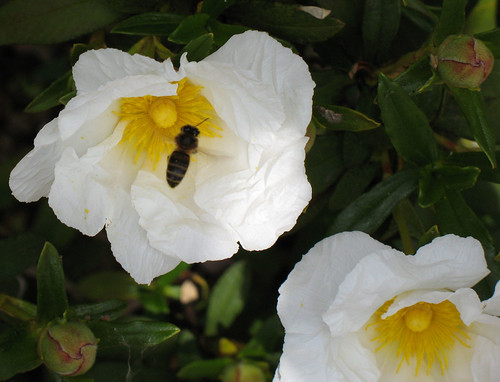
Meanwhile the Shropshire Star reports the there is a honey bee crisis in Shropshire:
Quarrelling queens in Shropshire honey hives have left a sting in the tail for local shoppers.
Queen bees have been fighting for supremacy in Shropshire bee hives, leading to a fall in population and a slump in honey production. Queen bees usually live for up to five years and each summer lay huge numbers of eggs, which keep local hives going, but beekeepers are warning of a crisis.
This year Shropshire hives have lost hundreds of thousands of bees because colonies are replacing their queens too early, which could leave honey stocks decimated.
Today Beryl Green, from the Shropshire Beekeepers’ Association, says: “This year, the early signs were that we were back on track because we had a bumper spring harvest, which we don’t normally get. The bees emerged from winter in good condition and were able to produce a healthy quantity of honey in spring.”
However, Mrs Green added that a bizarre re-queening phenomenon had put paid to hopes for a bumper harvest in July and August.
She said: “Normally, queen bees would live for three to five years. However, the hives have been re-queening, some of them more than once.
“That means the laying of eggs has been interrupted, which has led to smaller populations. Some of our bee colonies have been completely wiped out. Each colony, or hive, contains up to 60,000 bees, so when we lose a few colonies we find ourselves seriously depleted.”
Tags: Bee, Bees, Bowood, Flower, Insecticides