I am glad that has been made clear…
Random thoughts and photos of my journey through life…
I am glad that has been made clear…
10 Comments CherryPie on Mar 8th 2013
…….
7 Comments CherryPie on Mar 7th 2013
12 Comments CherryPie on Mar 6th 2013
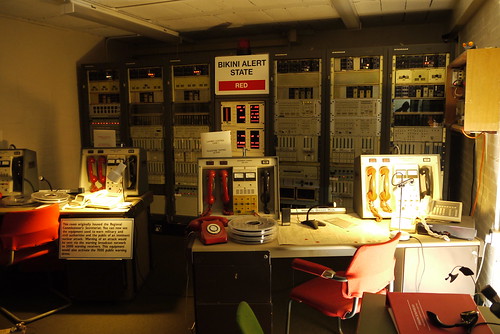
The alert system explained on Wiki:
The BIKINI state was an alert state indicator previously used by the UK Ministry of Defence to warn of non-specific forms of threat, including civil disorder, terrorism or war. Signs giving the current alert state were displayed at the entrance to government buildings and military installations. It was established on 19 May 1970. According to the Ministry of Defence, the wordbikini was randomly selected by a computer.[1]
Whilst similar to the DEFCON alert states used in the United States, the BIKINI levels were defined by the section of the military or organisation rather than UK-wide, and as a result, countermeasures and reactions to differing states may differ as acutely as from building to building. The highest levels of alert, RED and AMBER, were only intended to be maintained for limited times. The WHITE state has never been used in the history of the system.
It was replaced by a more general and public terrorism alert status, UK Threat Levels, an alert state system in use by the British government since 1 August 2006.
10 Comments CherryPie on Mar 5th 2013
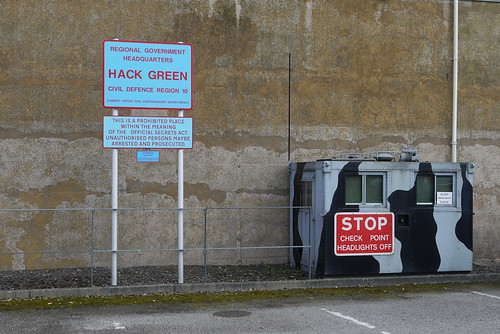
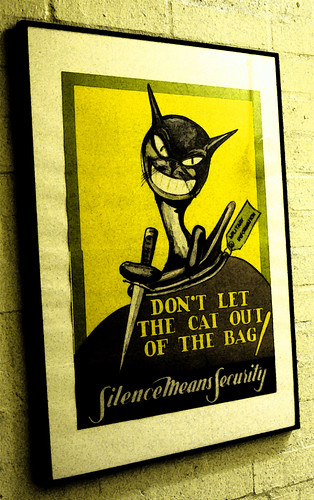
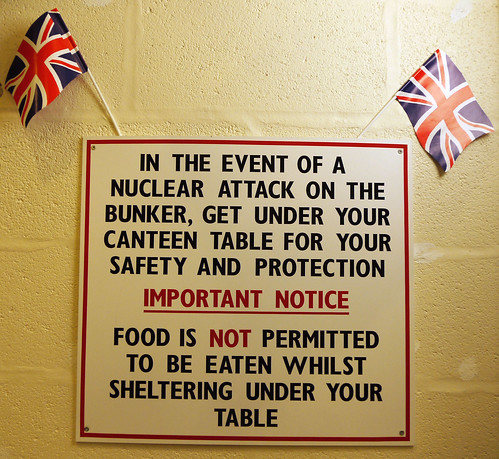
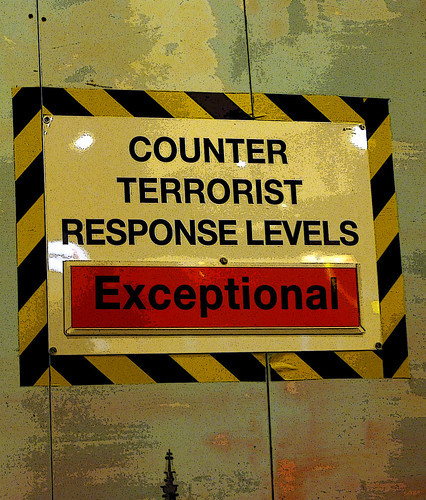
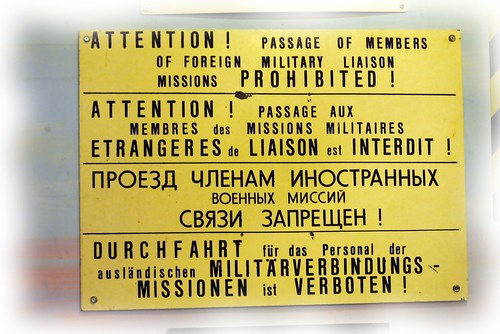
Hack Green, SECRET nuclear bunker:
In 1941 Hack Green, a site previously used as a bombing decoy site for the main railway centre at Crewe was chosen to become RAF Hack Green, to protect the land between Birmingham and Liverpool from hostile attack. Thus began the service of Hack Green and the airmen and women of Cheshire in the defence of the nation.
Hack Green was one of 21 fixed radar stations in the country and one of only 12 fully equipped with searchlights and fighter aircraft control. In one of the cabinets in the museum you can see some of the original communications equipment used by Searchlight Command.
Following World War II, a major examination of radar capability showed that our existing radar defence would be unable to cope with the threat posed by fast jet aircraft, let alone nuclear missiles. Any operational station needed to be protected against the new threat posed by nuclear weapons. ‘Rotor’ was the code name given to the Top Secret plan to replace the Chain Home and Ground Controlled Intercept radar network. The plan involved placing 1620 radar screens into massively constructed bunkers covering the UK. Hack Green was a semi-sunk bunker known as a type R6.
RAF Hack Green joined 12 Group protecting Britain against the perceived Soviet threat of both conventional and nuclear war. With new long range radar, Hack Green could give vital warning of the approach of hostile Russian bombers and enable the RAF to intercept with fighter aircraft or Bloodhound ground to air missiles. In accordance with the then held tripwire theory, that a number of nuclear bombers would always get through to some targets, early warning of impending attack enabled our Victor ‘V-Force’ nuclear bombers to become airborne and launch a retaliatory attack.
4 Comments CherryPie on Mar 4th 2013
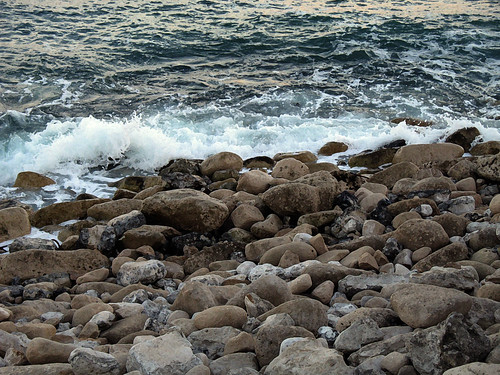
All the planes of existence are involved in it. It is not only that the soul is full of music; once you have heard the inner music, your mind is full of it, all your layers of being are full of it. Once known, not only do you hear it inside of you, it is outside too. In the song of birds you hear it, and in the wind passing through the trees you hear it, and in the waves striking on the rocks you hear it. In sound you hear it, in silence you hear it.
In fact the greatest music in the world is nothing but an echo of the inner music.
Osho (1931 – 1990)
8 Comments CherryPie on Mar 3rd 2013
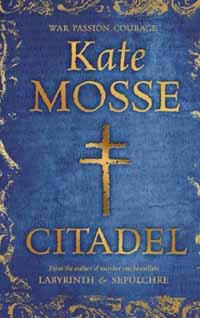 Synopsis (from book cover):
Summer, 1942. A spirited and courageous young woman, Sandrine, finds herself drawn into the world of the Resistance in Carcassonne under German Occupation. Her network – codenamed ‘Citadel’ – is made up of ordinary women who risk everything to fight the sinister battles raging in the shadows around them. as the war reaches its violent and bloody conclusion, Sandrine’s fate is tied up with that of three very different men. But who is the real enemy? Who is the real threat? And who is the true guardian of the ancient secrets that for generations have drawn people to the foothills of the Pyrenean mountains?
This is the story of ’Citadel’ – an epic tale of passion, loyalty, courage and betrayal.
Review:
This is the third and final book in Kate Mosse’s Languedoc trilogy, the previous two books being Labyrinth and Sepulchre. Labyrinth was set in the walled city of Carcassone, Sepulchre was set in Rennes les Bains and Citadel is set in the Bastide, the city just outside the walled city of Carcassonne.
I found the setting particularly enjoyable, having visited the places on my holiday to France last year. For me the book was a page turner. It crosses two time lines, the period of world war two and the much earlier period of AD 342.
Like the first two books in the series, the two time lines eventually connect together. The descriptive writing takes the reader back to what it must have been like during the war time occupation. It tells of the resistance and in particular the role of women in that movement. I won’t say any more, I don’t want to spoil the plot for anyone who has a desire to read the book.
Although the trilogy is complete I hope that Kate writes another novel based in the Midi area of France. I thoroughly recommend the series and now feel the urge to read them from the beginning again. Now where did I put Labyrinth…
8 Comments CherryPie on Mar 2nd 2013